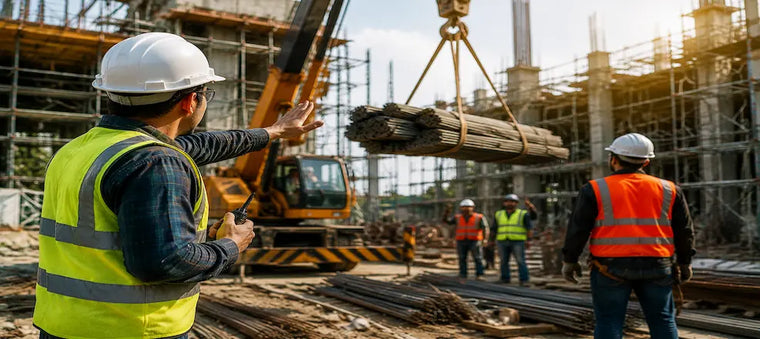
A construction project may simultaneously involve diesel machinery, excavation, material deliveries, concrete work, waste generation, hazardous chemicals and nearby communities. When environmental safety in construction is poorly managed, the consequences are significant. Worker exposure to hazardous materials, environmental damage to air and water resources, project delays, enforcement action from regulators, community complaints, and increased costs all become likely outcomes. Beyond operational concerns, weak environmental safety and ESG performance undermines credibility with investors, regulators, and stakeholders who increasingly expect construction projects to demonstrate accountability and long-term sustainability performance.
Featured Answer Box: What is environmental safety and ESG in construction?
Environmental safety and ESG in construction involve identifying and controlling how construction activities affect workers, communities, air, water, soil and natural resources. The approach connects daily EHS controls with measurable environmental, social and governance objectives, helping projects prevent harm, demonstrate accountability and improve long-term sustainability performance.
What Is Environmental Safety and ESG in Construction?
Environmental safety and ESG in construction spans three interconnected areas. The Environmental dimension includes pollution prevention, waste reduction, water and soil protection, resource efficiency, carbon management, and biodiversity protection. The Social dimension encompasses worker health and safety, fair working conditions, worker welfare, community health, traffic and public protection, and contractor standards. The Governance dimension establishes clear responsibilities, maintains risk registers, develops policies and procedures, implements incident reporting systems, conducts audits, monitors performance, and ensures transparent ESG reporting.
The critical principle underlying all three dimensions is this: ESG ambitions become credible only when they are supported by practical controls, responsible people, evidence and measurable results. Without this foundation, ESG commitments remain aspirational rather than effective.
How Should Construction Environmental Risks Be Assessed?
A practical environmental risk assessment process follows a structured sequence. First, define the activity in detail. Next, identify environmental aspects and safety hazards associated with that activity. Determine who or what may be affected—workers, the public, water sources, soil, air quality, or local ecosystems. Evaluate the likelihood, severity and exposure of potential harm. Review applicable legal and contractual requirements. Select appropriate controls using the hierarchy of controls. Assign clear ownership and set deadlines for implementation. Monitor residual risk continuously. Finally, review and update the assessment after incidents or when operational changes occur.
OSHA recommends that this be an ongoing process involving regular inspections, reviews of hazard information, thorough incident investigations, and analysis of recurring trends to identify patterns and emerging risks.
Suggested Risks-and-Controls Table:
|
Construction activity
|
Main risk
|
Possible impact
|
Practical controls
|
|
Earthworks
|
Dust and runoff
|
Air and water pollution
|
Water suppression, drainage and silt controls
|
|
Refuelling
|
Fuel spill
|
Soil and groundwater contamination
|
Bunding, drip trays and spill kits
|
|
Demolition
|
Dust, noise and waste
|
Exposure and community disruption
|
Isolation, monitoring and controlled removal
|
|
Concrete work
|
Alkaline washwater
|
Water and soil damage
|
Designated lined washout area
|
What Are the Main Environmental Risks on Construction Sites?
Dust, Silica and Equipment Emissions
Dust and airborne emissions represent major hazards on construction sites. Primary concerns include respirable crystalline silica, general particulate matter, PM2.5 particles, diesel exhaust, and dust migrating beyond site boundaries. Worker and community exposure to these pollutants can cause respiratory disease and long-term health damage.
Effective controls prioritise elimination and engineering solutions. These include prefabrication where possible, wet-cutting methods, local exhaust ventilation systems, enclosed equipment, covered material loads, wheel-washing stations, and dust monitoring. Low-emission or electric equipment should replace diesel-powered alternatives where feasible. Suitable respiratory protection provides a final layer, but it must not replace feasible source or engineering controls. OSHA's hierarchy of controls prioritises elimination and engineering solutions before administrative controls and PPE.
Noise and Vibration
Construction noise and vibration pose health and community impacts. Risks include hearing damage to workers, community complaints and disruption, structural disturbance to nearby buildings, and fatigue and communication problems on-site.
Controls include selecting quieter equipment, installing acoustic barriers around noisy work, maintaining equipment regularly, restricting working hours for high-noise activities, monitoring worker exposure, establishing hearing-protection zones, providing advance community notification, and ensuring workers use appropriate protective equipment.
Stormwater, Erosion and Sediment
Water pollution from stormwater runoff is a persistent construction risk. Sediment entering drains and waterways, chemical-contaminated runoff, flooding hazards, soil erosion, and concrete washwater discharge all damage local ecosystems and violate environmental regulations.
Practical controls include installing diversion drains, deploying silt fences, establishing stabilised site entrances, covering material stockpiles, installing sediment basins, protecting storm drains from debris, conducting weather inspections, and designating concrete-washout areas away from waterways. Permit thresholds and requirements vary by country and region; always verify local EPA and environmental authority guidelines.
Fuel, Chemicals and Hazardous Materials
Storage and handling of fuel and chemicals demands rigorous controls: labelled containers, secondary containment systems, approved storage areas, accessible safety data sheets, compatibility checks between materials, controlled refuelling procedures, readily available spill kits, trained response teams, and detailed waste and spill records.
Environmental controls must be integrated with worker and community protection, creating a comprehensive approach to construction safety and sustainability.
Which Health and Safety Risks Must Construction Projects Control?
Environmental conditions and worker-safety risks frequently overlap on construction sites. Falls from height represent the leading cause of construction fatalities and require guardrails, safe access systems, proper scaffolds, fall-restraint or arrest systems, and rescue planning. Excavation and trenching hazards demand soil assessment, protective systems, safe access, utility identification, and daily competent-person inspections. Electrical and equipment risks require isolation procedures, ground-fault protection, regular equipment inspections, exclusion zones, spotters, proper traffic routes, and competent operators.
Occupational-health risks include heat stress, noise exposure, vibration, silica inhalation, diesel exhaust exposure, manual handling injuries, fatigue, and mental-health pressures. The control process must prioritise the hierarchy: Elimination → Substitution → Engineering Controls → Administrative Controls → PPE. PPE alone never substitutes for feasible elimination or engineering solutions.
How Can EHS and ESG Be Managed as One System?
Construction companies achieve stronger results through integrated management. ISO 14001 contributes by defining environmental aspects and impacts, establishing compliance obligations, implementing operational controls, setting environmental objectives, and enabling monitoring and improvement. ISO 45001 contributes through hazard identification, worker participation, occupational health and safety risk management, incident investigation, and performance improvement.
Integrate these requirements into comprehensive construction project documents including the HSE plan, Construction Environmental Management Plan, risk register, method statements, permit-to-work procedures, emergency response plans, inspection schedules, and contractor mobilisation requirements. Procurement criteria should embed ESG expectations throughout the supply chain. Global compliance should reference ILO construction-safety principles for international projects.
Contractor and Subcontractor ESG Responsibilities
Construction performance depends heavily on contractors and supply-chain partners. Implementation requires prequalification processes, contractual EHS requirements, comprehensive site induction, competency verification, responsible material sourcing, worker-welfare expectations, waste documentation, incident and near-miss reporting, regular inspections, and corrective-action tracking.
A company cannot report strong construction ESG performance while ignoring unsafe subcontractors, undocumented waste or harmful supply-chain practices. Contractor accountability is non-negotiable for credible ESG performance.
Which ESG KPIs Should Construction Companies Track?
Effective measurement requires tracking specific performance indicators:
|
ESG area
|
Example construction KPI
|
|
Air quality
|
Dust exceedances and corrective actions
|
|
Water
|
Water consumption and uncontrolled discharges
|
|
Waste
|
Waste generated and percentage diverted from disposal
|
|
Carbon
|
Fuel use and project greenhouse-gas emissions
|
|
Safety
|
High-potential incidents and corrective-action closure
|
|
Health
|
Silica, noise or heat-exposure findings
|
|
Training
|
Percentage of workers completing required training
|
|
Contractors
|
Contractor inspection and compliance scores
|
|
Community
|
Complaints received and resolution time
|
|
Governance
|
Percentage of ESG data with supporting evidence
|
Distinguish between leading indicators (inspections, training, hazard reports and corrective-action closure) that predict future performance, and lagging indicators (injuries, spills, enforcement notices and pollution incidents) that measure past outcomes. GRI provides recognised sustainability-impact reporting reference standards for transparency.
Practical Environmental Safety and ESG Checklist
- Identify site-specific environmental and safety risks
- Confirm applicable legal and permit requirements
- Prepare the HSE plan and environmental management plan
- Apply the hierarchy of controls
- Set dust, noise, water, waste and emissions controls
- Assess contractors before mobilisation
- Train workers in practical site controls
- Inspect controls after weather and operational changes
- Record incidents, complaints and near misses
- Assign measurable ESG KPIs
- Verify data before reporting
- Review performance with management and workers
Building Safer and More Sustainable Construction Projects
Environmental safety, occupational health and ESG should not operate as separate programmes. Construction companies achieve stronger results when site risks, worker protection, environmental controls, contractor responsibilities and ESG data are managed through one accountable system. Strengthen your ability to identify risks, implement practical controls and support measurable sustainability performance through the Environmental Safety & Sustainability (ESG) course.