Featured Course
Manual Handling & Ergonomics
Master safer movement, reduce injury risks, and build practical ergonomics skills for a healthier, more productive workplace.


Master safer movement, reduce injury risks, and build practical ergonomics skills for a healthier, more productive workplace.
Every day, millions of workers face ergonomic risks that have little to do with the type of job they hold. A warehouse associate lifting boxes, a nurse repositioning patients, a factory technician repeating the same motion hundreds of times a shift, an office employee hunched over a laptop, and a remote worker typing from a kitchen table all share one thing in common: their bodies are being shaped by the demands of their work environment. For decades, injury prevention meant a laminated poster on a break room wall or a one-page lifting checklist handed out during onboarding.
That approach is no longer enough — and workplaces know it. Modern workplace injury prevention has evolved into a data-driven discipline that blends AI-powered ergonomic assessment, wearable safety technology, smart PPE, digital training platforms, predictive analytics, and thoughtful ergonomic workplace design. Together, these tools are reshaping how organizations think about ergonomics in the workplace — shifting from reactive injury response to proactive risk prevention.
In short: workplace ergonomics means designing jobs, tools, workstations, and tasks around human capability to reduce strain, fatigue, discomfort, and work-related musculoskeletal disorders.
Workplace ergonomics is often misunderstood as simply "having a good office chair". In reality, it's a much broader discipline that touches nearly every physical task performed on the job. True occupational ergonomics includes:
This applies just as much to industrial ergonomics on a factory floor as it does to office ergonomics in a corporate setting. The goal in every case is the same: fit the job to the person, not the person to the job.
This principle aligns closely with guidance from OSHA, which describes ergonomics as fitting the job to the worker rather than forcing the worker to adapt to poorly designed tasks and directly connects this approach to reducing the risk of musculoskeletal disorders. For a deeper technical breakdown, see the OSHA ergonomics guidance.
Ultimately, workplace ergonomics is a human factors safety issue — one that affects productivity, morale, and long-term worker health as much as it affects injury rates.
Despite growing awareness, work-related musculoskeletal disorders (MSDs) remain among the most common and costly workplace injuries. Understanding why they still happen starts with understanding the underlying risk factors.
Common ergonomic risk factors include:
NIOSH provides extensive guidance on preventing work-related MSDs, while OSHA specifically identifies lifting, bending, reaching, pushing, pulling, awkward postures, and repetitive tasks as core ergonomic risk factors that employers should actively monitor and control.

In short: the most common ergonomic hazards are repetitive movements, poor posture, heavy lifting, forceful tasks, awkward reaching, prolonged sitting or standing, and poorly designed workstations.
What makes these hazards persistent isn't a lack of awareness — it's the difficulty of catching them in real time. Traditional inspections happen periodically, not continuously, which means many ergonomic hazards go unnoticed until an injury or complaint forces attention. This gap is exactly where MSD prevention strategies have had to evolve, and where workplace musculoskeletal disorders continue to slip through outdated systems.
The shift from old-school safety programs to modern, tech-enabled ones represents one of the biggest changes in workplace injury prevention in the last decade.
Traditional ergonomics relied on:
Modern ergonomics uses:
The difference is speed and precision. Where a paper checklist might catch a problem months after it starts, smart ergonomics tools can flag risky movement patterns the moment they occur — often before a worker even feels discomfort.
It's important to note, though, that technology is a support system, not a replacement. AI in workplace safety helps safety teams identify risks earlier and prioritize interventions, but it doesn't eliminate the need for proper training, active worker participation, or hands-on risk control. The most effective digital ergonomics programs combine workplace safety technology with human judgment — using data to inform decisions, not make them in isolation.

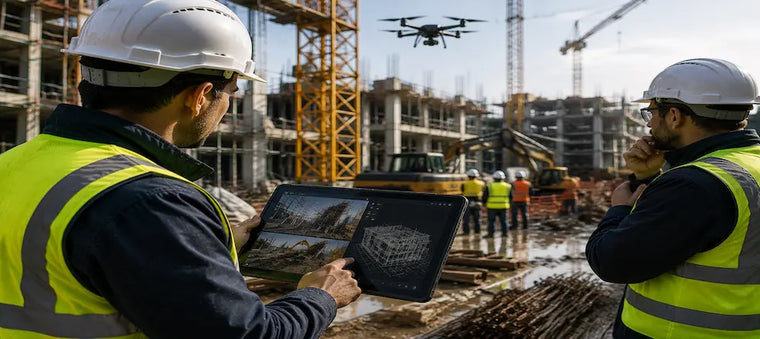
AI ergonomics tools use computer vision and motion-tracking algorithms to analyse posture, movement patterns, task repetition, and workstation setup in real time. Rather than waiting for a supervisor to spot a problem during a periodic walkthrough, AI ergonomic assessment systems can continuously evaluate how a worker bends, reaches, twists, or lifts throughout a shift. This data feeds into predictive safety analytics models that flag risky movement patterns before they escalate into injury — giving safety teams the ability to intervene early rather than react after an incident has already occurred. AI workplace safety platforms are increasingly being layered into existing EHS systems, turning raw movement data into actionable risk scores.
Wearable safety technology includes motion sensors, posture sensors, fatigue monitors, and connected worker devices that track physical strain throughout the workday. NIOSH's bulletin on wearable technologies for construction safety are being developed and used for construction safety applications such as proximity alerts and physiological monitoring, helping identify hazardous conditions before they cause harm. These workplace wearables don't just collect data passively — many provide real-time ergonomic monitoring, alerting workers immediately when posture drifts into a risky range or fatigue indicators start to climb, allowing for in-the-moment correction rather than after-the-fact reporting.
Smart PPE takes traditional protective equipment and adds a layer of intelligence to it. Sensor-enabled helmets, vibration alerts, fatigue monitoring devices, and environmental exposure trackers all fall under this category of smart personal protective equipment. These tools support connected worker safety by linking individual PPE to broader safety dashboards, so supervisors can monitor exposure levels, fatigue signals, and environmental risks across an entire site rather than relying solely on individual worker reports. This connected approach turns everyday smart safety devices into an early-warning network.
Workplace exoskeletons are wearable support structures designed to reduce strain during manual handling, back-intensive tasks, shoulder-loading work, and overhead reaching. NIOSH's bulletin on exoskeletons for preventing MSDs in construction as assistive devices with potential to help prevent work-related musculoskeletal disorders in construction and other industrial settings. As industrial exoskeletons become lighter and more affordable, they're moving from pilot programs into everyday use — offering a practical form of exoskeleton injury prevention for tasks that can't easily be automated or redesigned.
Automation and collaborative robots — often called cobots — can take over repetitive, heavy, or high-force tasks when properly risk assessed. Robotics in workplace safety isn't about replacing workers; it's about removing the most physically damaging portions of a job so people can focus on tasks that require judgment and skill. Done correctly, cobots workplace safety integration reduces cumulative strain over time, making automation and ergonomics a natural pairing in modern facility design. This shift toward robotic ergonomics is one of the clearest examples of technology directly reducing injury exposure.

Office ergonomics doesn't disappear just because work has moved outside a traditional office. Whether someone works from a corporate desk, a home office, or splits time between both, the same principles apply: monitor height, chair and desk adjustment, laptop positioning, digital eye strain prevention, break reminders, and posture correction tools all play a role in reducing strain.
Remote work ergonomics and hybrid work ergonomics bring unique challenges, since home setups are rarely designed with the same care as corporate workstations. This is where remote ergonomic assessment tools have become valuable — allowing safety teams to evaluate home workstations virtually and recommend adjustments.
The HSE notes that poorly designed display screen workstations can contribute to pain in the neck, shoulders, back, arms, wrists, and hands, reinforcing why proper ergonomic workstation setup matters regardless of location. For detailed guidance, see the HSE display screen equipment guidance.
In short: a good ergonomic workstation keeps the screen at eye level, supports the back, keeps elbows close to the body, allows relaxed shoulders, and reduces strain on the wrists, neck, and eyes.
Good computer workstation ergonomics isn't complicated, but it does require intentional setup — something that's easy to overlook in fast-paced or informal remote environments.
A strong ergonomic safety program doesn't happen by accident. Employers and safety managers building a workplace ergonomics program should follow a structured approach:
EU-OSHA places strong emphasis on MSD prevention and sharing good practices across industries, offering a useful reference point for organizations building or refining their programs. See the EU-OSHA musculoskeletal disorders guidance for further detail.
Effective ergonomic interventions rarely rely on a single fix — they combine several of these steps working together, reviewed and adjusted over time.

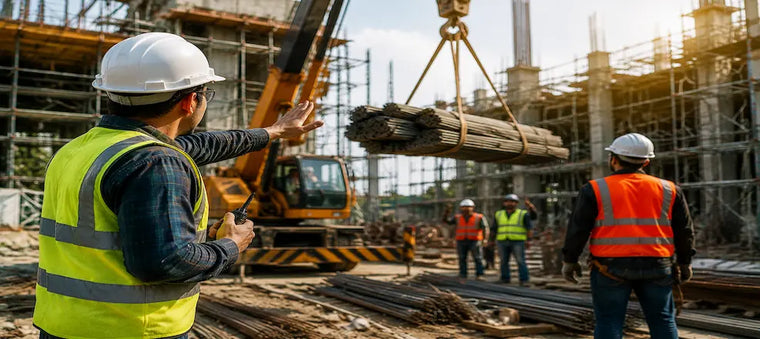
Technology can detect risks, but it can't replace human understanding. Workers and supervisors still need to know how to move safely, set up a workstation correctly, handle manual loads properly, report risks early, and apply ergonomic best practices day to day. No sensor or algorithm can substitute for a worker who genuinely understands why proper lifting technique matters.
For professionals, workers, and job seekers who want structured safety knowledge, the [Manual Handling & Ergonomics course] can help build practical understanding of safe lifting, ergonomic risk factors, workplace posture, and injury prevention techniques. Workplace ergonomics training ensures that the insights generated by AI, wearables, and smart PPE actually translate into safer behavior on the ground — because ergonomic awareness training turns data into action.
The future of ergonomics points toward deeper integration between people and technology: AI-powered ergonomics tools that get smarter with more data, predictive injury prevention that catches risks weeks before they become problems, digital ergonomic assessments replacing static checklists, and wearable fatigue monitoring becoming standard rather than optional.
At the core of all of this remains human-centred workplace design — technology should support workers, not surveil them. As ergonomic analytics and data driven safety tools become more common, they need to be implemented ethically, with clear attention to privacy, worker trust, and practical usability. The future of workplace safety depends as much on how thoughtfully this technology is introduced as on how advanced it becomes.

Modern workplace ergonomics is no longer optional. It is a core part of workplace health and safety, employee wellbeing, productivity, and compliance. Technology helps employers see risks earlier, but real injury prevention depends on combining ergonomic workplace design, risk assessment, smart safety tools, worker participation, and proper ergonomics training.
Explore our Manual Handling & Ergonomics course to strengthen your understanding of ergonomic safety and workplace injury prevention.