Featured Course
Manual Handling & Ergonomics
Build safer work habits, reduce injury risks, and improve everyday performance with practical manual handling and ergonomics training.


Build safer work habits, reduce injury risks, and improve everyday performance with practical manual handling and ergonomics training.
Manual handling happens in almost every industry, whether it's a warehouse worker lifting boxes, a nurse repositioning a patient, a retailer restocking shelves, a construction crew moving materials, an office employee shifting furniture, or a delivery driver unloading a van. Lifting, carrying, pushing, pulling, lowering, holding, or moving loads is part of daily work life across construction, logistics, manufacturing, healthcare, retail, maintenance, transport, and even office environments. When these tasks are done incorrectly, they can cause serious and lasting injuries.
The Canadian Centre for Occupational Health and Safety (CCOHS) defines manual materials handling as moving or handling things by lifting, lowering, pushing, pulling, carrying, holding, or restraining — and notes that it is closely linked with occupational fatigue and low back injuries. This is why manual handling training remains one of the most essential forms of workplace safety education.
Manual handling training teaches workers how to move loads safely, identify manual handling hazards, use proper lifting techniques, reduce ergonomic risk factors, and prevent injuries such as back strain, muscle damage, joint stress, and musculoskeletal disorders.
This type of training typically covers:
Manual handling training is not only for heavy industry. It's equally valuable for healthcare staff moving patients, office workers lifting boxes or shifting equipment, retail employees stocking shelves, cleaners moving supplies, drivers loading and unloading goods, warehouse teams handling stock, supervisors overseeing daily operations, and new job seekers entering physically demanding roles for the first time.
Poor manual handling is one of the most common workplace safety issues, and injuries often develop through repeated strain, awkward posture, overreaching, twisting, heavy lifting, time pressure, and poor workplace layout — not just single dramatic accidents.
OSHA explains that ergonomics means fitting the job to the person, which helps reduce muscle fatigue and lowers both the number and severity of work-related musculoskeletal disorders. Manual handling training puts this principle into practice.
Key reasons this training matters:
This is why manual handling training is often grouped with broader back safety training, back injury prevention, workplace injury prevention training, occupational safety training, and health and safety training programs.
Manual handling risk increases significantly when a task involves heavy loads, awkward posture, repetitive movement, long carrying distances, unstable objects, poor grip, restricted space, slippery surfaces, or a lack of mechanical aids to assist the worker.
OSHA's technical guidance notes that manual lifting risk is influenced by several variables, including how far the load sits from the worker's spine, the height at which lifting occurs, trunk twisting, grip quality, and how frequently the handling task is repeated.
Recognizing these manual handling risks and manual handling hazards is the first step toward preventing hazardous manual handling. Training helps workers and supervisors spot manual handling risk factors early, before they lead to hazardous manual tasks and injury.

When manual handling is done incorrectly, the consequences can range from mild discomfort to life-altering injury. Common outcomes include:
Some injuries happen suddenly — a single poor lift, an awkward twist, or a moment of lost grip. Others develop gradually, building up over weeks, months, or years of repeated unsafe handling practices. This gradual wear is often the most dangerous, because workers may not notice the damage until it becomes chronic pain or a diagnosed musculoskeletal disorder.
This is exactly why manual handling training focuses not just on emergency response but on building safe habits — correct posture, proper lifting technique, workload planning, and hazard awareness — into everyday tasks. Prevention through training is far more effective and far less costly than dealing with the aftermath of a workplace injury.
The safest manual handling technique is to plan the lift, check the load, keep the load close, bend the knees, maintain a neutral back, avoid twisting, use controlled movement, and ask for help when needed.
These safe lifting techniques, along with proper lifting techniques, ergonomic lifting techniques, safe carrying techniques, and safe pushing and pulling techniques, form the foundation of safe handling of loads in any workplace.

Risk assessment helps employers and supervisors identify hazards before injury happens. HSE's manual handling guidance explains how employers can reduce injury risk and meet duties under the Manual Handling Operations Regulations 1992 in Great Britain.
The simple TILE structure covers the essentials:
Also consider frequency of lifting, distance carried, need for twisting or bending, availability of lifting aids, team lifting requirements, and training and supervision. Together, these form a full manual handling risk assessment, a lifting risk assessment, and ergonomic risk assessment — often documented as a manual handling checklist.

Training alone is not enough. Workplaces should control risk through better job design, applying manual handling control measures such as:
This approach reflects the broader manual handling hierarchy of control and supports long-term manual handling risk management across the business.

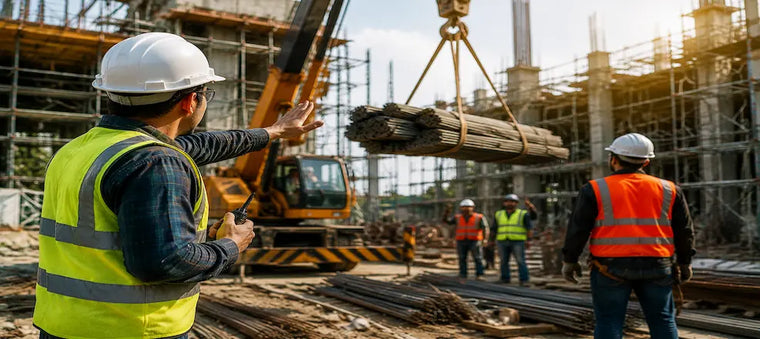
Construction — cement bags, tools, steel sections, site debris, ladders, awkward ground, and team lifting all demand extra care in manual handling in construction.
Warehouse and Logistics — Cartons, pallets, repetitive picking, and pushing and pulling are central to load handling safety and manual handling in warehouse and logistics settings.
Healthcare and Nursing — Patient moving and handling, bed transfers, hoists, posture, and clear communication are vital, making patient manual handling training and moving and handling training essential in manual handling in healthcare.
Manufacturing — repetitive manual material handling, machine loading, workstation design, and ergonomic layout define safe practice in manual handling in manufacturing.
Office and Retail — boxes, deliveries, stockrooms, display materials, files, and workstation ergonomics matter just as much in manual handling in retail and office settings.
Requirements vary by country, but the core expectation is similar: employers must identify hazards, reduce risk, train workers, and provide safe systems of work. OSHA covers US workplace ergonomics guidance, HSE covers UK manual handling, and EU-OSHA addresses European musculoskeletal disorder prevention through directives including the Manual Handling Directive, while CCOHS provides Canadian manual materials handling guidance.
Online manual handling training suits new employees, warehouse workers, construction workers, healthcare workers, logistics workers, supervisors, job seekers, employees needing refresher training, and workers applying for international roles.
Build practical knowledge in safe lifting, ergonomics, and workplace injury prevention with our Manual Handling & Ergonomics course.
Do: plan the lift, keep the load close, use mechanical aids, ask for help with heavy or awkward loads, report hazards early, follow workplace procedures.
Don't: twist while lifting, lift loads you cannot control, rush manual handling tasks, block your view with large loads, ignore pain or discomfort, use unsafe shortcuts.
This manual handling safety checklist supports a clear manual handling procedure, manual handling policy, and effective manual handling toolbox talk.

Manual handling training helps workers understand risks, use safe lifting techniques, follow manual handling guidelines, and prevent workplace injuries. It also supports better ergonomics, stronger compliance, and safer working habits across industries.
For structured learning, practical safety awareness, and workplace-ready skills, explore our Manual Handling & Ergonomics course.