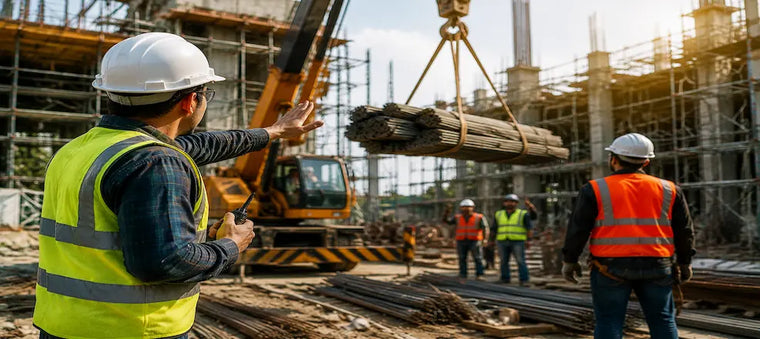
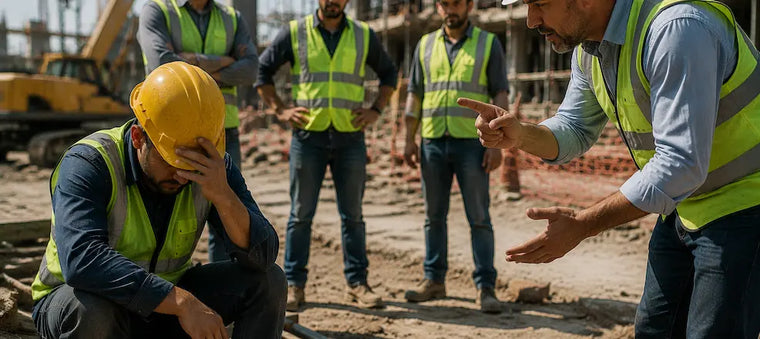
Imagine two factories operating side by side in the same industry, producing the same products, employing workers under similar conditions. In the first factory, a worker is injured after falling from an improperly secured ladder. The management team springs into action — investigations are launched, reports are filed, new procedures are written. In the second factory, a safety officer identified that same unstable ladder three weeks earlier during a routine inspection. The hazard was corrected before anyone ever climbed it.
The difference between these two factories is not luck, resources, or workforce skill. It is something far more deliberate: one organization practices reactive risk management, while the other has embedded proactive risk management into its culture.
This distinction matters more than many organizations realize. Workplace accidents cost lives, productivity, and money — and most of them are preventable. Understanding how these two approaches differ, and why the global shift toward prevention is accelerating, is the foundation of any serious workplace safety program.
In this guide, you will learn what proactive and reactive risk management mean, the key differences between both approaches, why modern industries prioritise prevention, how workplace safety regulations support proactive safety management, and practical steps organisations can implement immediately.
2. What Is Risk Management in Workplace Safety?
Risk management is the process of identifying hazards, evaluating risks, implementing controls, and continuously monitoring workplace conditions to prevent injuries, illnesses, and operational disruptions.
It is not a single action but an ongoing cycle. Organizations must first identify what could go wrong — whether that is chemical exposure, mechanical failure, ergonomic strain, or fall hazards. They then evaluate how likely and how severe the consequences could be. From there, control measures are selected and implemented, ranging from engineering solutions to administrative policies to personal protective equipment. Finally, those controls are monitored and reviewed to ensure they remain effective over time.
This cycle of continuous improvement is what separates organizations with strong safety cultures from those that treat safety as a compliance checkbox. Risk management is also a core component of every effective Safety Management System (SMS), forming the backbone around which training, auditing, and communication are built.
3. What Is Reactive Risk Management?
Reactive risk management focuses on responding to incidents after they occur. Organizations investigate accidents, determine root causes, and implement corrective actions to prevent recurrence.
Common reactive activities include accident investigations, injury reporting and documentation, incident response procedures, equipment failure analysis, corrective action planning, and regulatory reporting to authorities.
Consider a practical example: a worker falls from a ladder on a construction site. The company investigates the incident, identifies that the ladder was not properly secured, and introduces mandatory ladder inspection procedures going forward. The corrective action is real and valuable — but it arrived too late to prevent the original injury.
Reactive management is not without merit. Thorough incident investigation is essential for learning and improvement. However, relying on it as the primary safety strategy means that someone must be harmed before action is taken. That is an avoidable cost, both human and financial.
4. What Is Proactive Risk Management?
Proactive risk management focuses on identifying and controlling hazards before incidents occur. It aims to prevent accidents through planning, monitoring, and continuous improvement rather than through post-incident response.
Common proactive activities include hazard identification walkthroughs, formal risk assessments, near-miss reporting systems, safety observations and behavioral audits, preventive maintenance programs, internal safety audits, structured worker consultation, and ongoing training programs.
Using the same scenario: a safety officer conducts a routine inspection and identifies the same unstable ladder before any worker climbs it. The hazard is corrected, the risk is eliminated, and no injury occurs. There is no report to file, no investigation to conduct, and no worker to treat — because prevention worked exactly as intended.
5. Proactive vs Reactive Risk Management: Key Differences
|
Factor
|
Proactive Risk Management
|
Reactive Risk Management
|
|
Timing
|
Before incidents
|
After incidents
|
|
Focus
|
Prevention
|
Response
|
|
Data Used
|
Leading indicators
|
Lagging indicators
|
|
Cost Impact
|
Lower long-term costs
|
Higher incident costs
|
|
Safety Culture
|
Stronger, more engaged
|
Limited, compliance-driven
|
|
Compliance Benefits
|
Higher
|
Moderate
|
The most effective organizations do not abandon reactive processes entirely — incident investigation remains critical. However, proactive measures must always be the primary strategy, with reactive processes serving as a learning and improvement layer rather than the first line of defense.
6. Why Modern Industries Are Moving Toward Proactive Safety Management
Rising Regulatory Expectations
Regulatory frameworks in many countries increasingly focus on prevention rather than reaction. Employers are generally expected to identify hazards, assess risks, and apply suitable controls before harm occurs, not only after an incident has taken place. This shift mirrors the structure of ISO 45001, the international standard for occupational health and safety management systems, which is built around proactive hazard control rather than after-the-fact compliance.
This preventive approach is a core part of modern workplace health and safety management. It supports the idea that workers should be protected through safe systems, safe equipment, proper planning, and effective risk control from the beginning of each work activity.
Across industries, occupational safety guidance often reinforces the same principle: eliminate hazards where possible, reduce risks at the source, involve workers, document findings, and review controls regularly. Failure to complete suitable risk assessments can expose organisations to enforcement action, legal liability, workplace disruption, and reputational damage.
Increasing Financial Costs of Reactive Management
The financial argument for proactive safety is compelling and well-documented. When organizations rely primarily on reactive management, the costs accumulate rapidly and extend far beyond the immediate medical expenses of an injured worker.
Direct costs include medical treatment, rehabilitation, compensation claims, and potential legal penalties. Indirect costs — which studies consistently show are several times higher than direct costs — include lost productivity during investigation and recovery, damaged equipment or materials, overtime costs to cover absent workers, increased insurance premiums, and the significant management time consumed by incident response and regulatory reporting.
Reputation damage is perhaps the most underestimated financial consequence. A serious workplace accident can affect client relationships, tender eligibility, and the ability to attract skilled workers. In contrast, organizations with demonstrably strong proactive safety programs often gain competitive advantages in procurement, insurance pricing, and workforce retention.
Workforce Expectations
Today's workforce, particularly younger professionals entering skilled trades and industrial roles, approaches workplace safety with different expectations than previous generations. Employees increasingly expect safe working environments supported by preventive programs, transparent communication about hazards, and genuine consultation on safety decisions.
Organizations that invest in proactive safety cultures tend to report stronger employee engagement, lower turnover, and greater productivity — because workers who trust that their employer takes their safety seriously are more likely to participate actively in safety programs, report near-misses without fear of blame, and take ownership of safe working practices. Proactive safety management, in this sense, is not only a legal and financial strategy — it is a fundamental expression of organizational values.
7. The Role of Hazard Identification in Accident Prevention
Hazard identification is the process of recognizing workplace conditions, activities, or substances that could cause injury, illness, or damage. It forms the foundation of proactive risk management — because you cannot control a hazard you have not yet recognized.
Workplace hazards fall into five broad categories. Physical hazards include noise, temperature extremes, falling objects, and slip or trip risks. Chemical hazards cover exposure to toxic substances, solvents, dust, and fumes. Biological hazards involve bacteria, viruses, and other organisms workers may encounter, particularly in healthcare or waste management settings. Ergonomic hazards relate to repetitive movements, poor posture, and manual handling tasks that cause strain over time. Finally, psychosocial hazards — increasingly recognized in modern safety frameworks — include workplace stress, violence, burnout, and harassment.
Effective hazard identification requires structured methods: workplace walkthroughs, worker consultations, equipment inspections, task analysis, and review of historical incident data. When organizations invest in systematic hazard identification, they create the first and most critical layer of accident prevention.
8. How Risk Assessments Support Proactive Risk Management
A risk assessment translates identified hazards into actionable decisions. The process follows five essential steps. First, hazards are identified through inspection and consultation. Second, the people who may be harmed are determined — including workers, contractors, and visitors. Third, risks are evaluated based on likelihood and severity. Fourth, appropriate control measures are selected and implemented, following the hierarchy of controls from elimination through to personal protective equipment. Fifth, the effectiveness of those controls is reviewed and updated regularly.
Risk assessments are not a one-time administrative exercise. They must be repeated when work processes change, when new equipment is introduced, when incidents occur, or when legislation requires review. Organizations that treat risk assessments as living documents rather than compliance forms are far better positioned to prevent harm.
To learn the complete methodology, explore our Risk Assessment & Management Course, which provides practical guidance on hazard identification, risk evaluation, control selection, and workplace compliance.
9. Leading Indicators vs Lagging Indicators in Safety Performance
Understanding the difference between leading and lagging indicators is essential for measuring safety performance accurately.
Leading indicators measure preventive activities before incidents occur. Examples include safety inspection completion rates, training participation, near-miss reports submitted, audit findings resolved, and hazard reports logged. These metrics tell an organization how actively it is working to prevent harm.
Lagging indicators measure outcomes after incidents have already happened. Examples include injury rates, lost-time incidents, workers' compensation claims, and property damage events. While lagging indicators confirm that something went wrong, they offer no opportunity to prevent the original harm.
Leading indicators are the backbone of predictive risk management. This distinction is formalised in OSHA's guidance on leading indicators, which defines them as proactive, preventive, and predictive measures of safety program performance. Organizations that track and act on leading indicator data consistently outperform those that rely solely on injury statistics to judge safety performance.
10. Building a Strong Safety Culture Through Proactive Risk Management
A strong safety culture encourages workers to identify and report hazards before they result in incidents. Culture, however, does not develop by itself — it must be actively built and sustained.
Leadership commitment is the starting point. When managers visibly prioritize safety, participate in inspections, and respond constructively to hazard reports, employees recognize that safety is a genuine organizational value rather than a bureaucratic requirement. Employee involvement is equally critical — workers closest to the task often identify hazards that management overlooks. Open reporting systems, including anonymous near-miss reporting, remove the fear of blame and generate the data organizations need to improve. Learning from every near-miss, incident, and audit finding drives continuous improvement and prevents repeated failures.
11. Industry Examples of Proactive Risk Management
Proactive risk management takes different forms across industries, but the underlying principle is consistent.
In construction, daily toolbox talks brief workers on site-specific hazards, site inspections identify changing conditions, and permit-to-work systems control high-risk activities. In manufacturing, machine guarding assessments prevent contact injuries and preventive maintenance reduces unexpected equipment failure. In oil and gas, process safety management and barrier verification protect against catastrophic releases. In healthcare, infection prevention programs and ergonomic assessments protect staff from biological and physical harm. In logistics and warehousing, traffic management plans and forklift safety audits address the significant risks created by vehicles and pedestrians sharing the same space.
12. Best Practices for Implementing Proactive Workplace Risk Management
Organizations looking to strengthen their proactive approach should prioritize the following: conduct regular and documented risk assessments; encourage near-miss reporting without blame; track and act on leading indicators; train employees continuously rather than only at onboarding; perform scheduled and unannounced workplace inspections; review all incidents and near-misses for lessons learned; improve safety communication across all levels; and ensure visible, consistent management commitment to prevention.
The distinction between reactive and proactive risk management ultimately comes down to timing and intent. Reactive risk management responds to incidents once harm has occurred, while proactive risk management prevents incidents by addressing hazards before anyone is ever exposed to them.
In Risk Assessment & Management, modern organisations that lead in safety prioritise hazard identification, structured risk assessments, and leading indicator data. This preventive approach is strongly supported by workplace health and safety systems in many countries, where employers are expected to identify risks before harm occurs. The evidence is consistent: organisations with strong proactive safety cultures experience fewer injuries, better compliance, lower costs, and stronger operational performance.
Prevention is not an ideal — it is a practical, achievable standard that every organisation can work toward with the right systems, commitment, and knowledge.