2026 Trends
Jul 20, 2026
7 min read

Scope 1 Scope 2 and Scope 3 Emissions Explained for Construction Projects

Construction Scope 1, 2, and 3 emissions define direct, indirect, and value-chain carbon impacts. This guide explains how to measure, report, and reduce emissions, connect reporting with ESG, apply circular-economy strategies, and integrate carbon reduction into HSE management for safer, sustainable construction projects.

Why Construction Teams Must Understand Emissions Scopes

Construction companies must understand emissions scopes to establish a credible carbon baseline, assign responsibility for data collection, and identify major sources of environmental impact. Categorising emissions helps organisations respond to client, investor and tender requirements while developing realistic carbon-reduction plans. Understanding Scope 1, Scope 2 and Scope 3 emissions is essential for any construction business seeking to measure and reduce its environmental footprint.

What Are Scope 1, Scope 2 and Scope 3 Emissions?

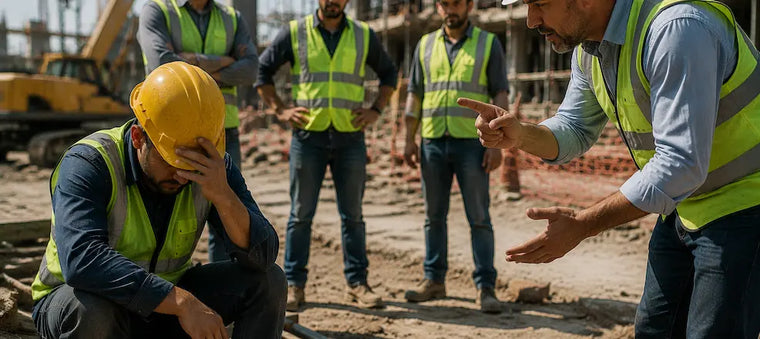
Worker views Scope 1, 2, 3 emissions on-site

The three emissions scopes prevent companies from placing every emission in one undifferentiated carbon total. Each scope classifies emissions based on source and ownership:

Scope

Meaning

Construction Example

Typical Data Source

Scope 1

Direct emissions from owned or controlled sources

Diesel burned in company-owned excavators

Fuel records and equipment logs

Scope 2

Indirect emissions from purchased energy

Electricity supplied to the site compound

Utility bills and meter readings

Scope 3

Other indirect value-chain emissions

Cement, steel, subcontracted transport and waste

Supplier data, EPDs and procurement records

The GHG Protocol provides the recognised corporate framework for measuring and reporting organisational emissions.

Scope 1 Emissions in Construction

Construction Scope 1 emissions are direct greenhouse gas emissions from sources owned or controlled by the reporting construction company.

Practical Examples of Scope 1 Emissions

  • Diesel or petrol burned in owned excavators, cranes and generators
  • Fuel used by company-owned cars, vans and trucks
  • Natural gas used in offices, workshops or temporary heating systems
  • Refrigerant leakage from owned cooling equipment
  • Fuel consumed by owned manufacturing or prefabrication facilities

Important Classification Note

Equipment used on the project is not automatically Scope 1. Classification depends on ownership, control and the organisation's chosen reporting boundary. Only emissions from sources the construction company owns or directly controls should be counted as Scope 1.

Scope 2 Emissions in Construction

Construction Scope 2 emissions are indirect emissions associated with electricity, steam, heat or cooling purchased for company operations and project sites.

Common Scope 2 Sources

  • Grid electricity used by site offices
  • Electricity used for lighting, tower cranes and electric tools
  • Purchased electricity for factories, depots and warehouses
  • Purchased heating or cooling for managed facilities

Reporting organisations may need to consider location-based and market-based Scope 2 accounting, depending on the framework being followed. Scope 2 is usually easier to identify than Scope 3 because energy invoices and meter readings are often already available.

Scope 3 Emissions in Construction

Construction Scope 3 emissions are indirect emissions generated across the company's upstream and downstream value chain.

High-Relevance Construction Examples

  • Production of cement, concrete, steel, glass, insulation and timber
  • Purchased equipment and other capital goods
  • Supplier and subcontractor operations
  • Transportation of materials to the project
  • Waste treatment and disposal
  • Employee commuting and business travel
  • Fuel- and energy-related emissions not included in Scope 1 or 2
  • Leased equipment, depending on the reporting boundary
  • Use, maintenance and end-of-life treatment of completed assets where relevant

The GHG Protocol provides calculation methods for 15 Scope 3 categories, including purchased goods and services, capital goods, transport and waste.

Embodied Carbon and Scope 3

Embodied carbon is commonly reported within Scope 3 by the company purchasing construction products, but embodied carbon and Scope 3 are not interchangeable terms. Understanding this distinction is critical for accurate carbon reporting.

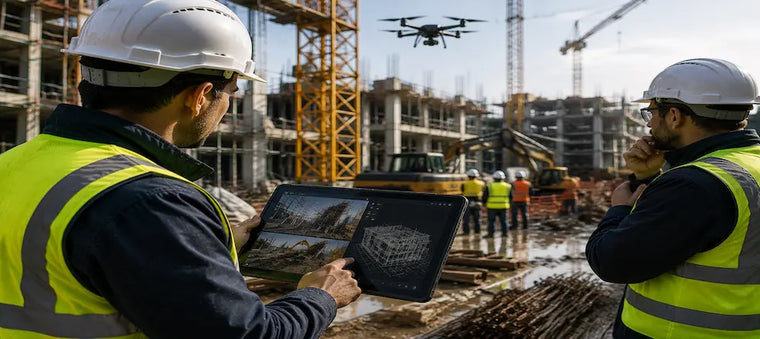
Construction site showing materials, transport, contractors, and waste flow.

Corporate Emissions Scopes vs Whole-Life Carbon

Key Distinctions

  • Scope 1, 2 and 3 classify emissions from the perspective of a reporting organisation
  • Whole-life carbon assessment  measures emissions across the lifecycle of a built asset
  • Asset lifecycle stages include material production, transportation, construction, operation, maintenance and end-of-life activities

A lifecycle stage does not always correspond to one universal scope because different organisations may classify the same activity differently. For comprehensive sustainability reporting, refer to RICS guidance, which covers embodied, operational and other lifecycle emissions across buildings and infrastructure.

How to Calculate Scope 1, Scope 2 and Scope 3 Emissions

Construction carbon calculation steps.

Calculating construction emissions requires a structured process:

  1. Define the organisational boundary—decide which companies, joint ventures, sites and operations are included
  2. Set the reporting period and base year
  3. Identify emission sources under each scope
  4. Collect activity data, such as litres of diesel, kilowatt-hours of electricity, tonnes of materials or transport distances
  5. Select recognised emission factors appropriate to the country, energy source, material, supplier and reporting year
  6. Calculate emissions in CO₂e
  7. Review data quality, assumptions and exclusions
  8. Document the methodology so the inventory can be repeated and verified

GHG emissions = Activity data × Applicable emission factor

Emission factors must come from credible, current and geographically appropriate sources.The GHG Protocol Scope 3 calculation guidance provides step-by-step methods for selecting emission factors and calculating each of the 15 Scope 3 categories.

Simple Construction Emissions Calculation Example

Consider an illustrative project containing:

  • Litres of diesel used by owned construction machinery → Scope 1
  • Kilowatt-hours of purchased site electricity → Scope 2
  • Tonnes of concrete purchased → Scope 3
  • Distance travelled by subcontracted delivery vehicles → Scope 3

The example is illustrative; actual calculations require appropriate local emission factors, supplier information or verified EPD data.

Why Scope 3 Is Often the Hardest Construction Category

Scope 3 presents multiple challenges:

  • Multiple suppliers and subcontractors
  • Inconsistent carbon-data formats
  • Missing product-specific information
  • Reliance on estimates or industry averages
  • Changing specifications during design and procurement
  • Risk of double counting
  • Limited visibility beyond direct suppliers

Scope 3 may represent a substantial share of a construction company's reported footprint, particularly where material procurement and subcontracted activity are significant, but the result depends on the business model and reporting boundary.

How Construction Projects Can Reduce Scope 1, 2 and Scope 3 Emissions

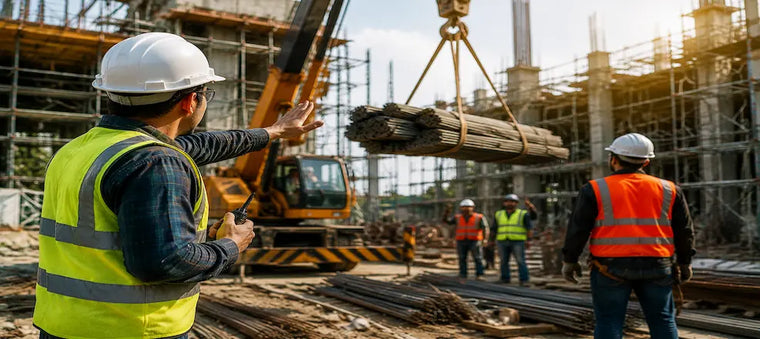
Construction site showing Scope 1, 2, 3 carbon reduction measures.

Scope 1 Reduction Actions

  • Replace unnecessary diesel use with electric or lower-emission equipment
  • Improve equipment maintenance and anti-idling controls
  • Optimise vehicle and plant scheduling
  • Prevent refrigerant leakage

Scope 2 Reduction Actions

  • Improve site energy efficiency
  • Use temporary power monitoring
  • Procure credible renewable electricity where available
  • Replace inefficient lighting, heating and equipment

Scope 3 Reduction Actions

  • Specify lower-carbon concrete and steel
  • Request product-specific EPDs
  • Reduce material quantities through efficient design
  • Reuse materials and apply circular-economy principles
  • Consolidate deliveries and shorten transport distances
  • Include carbon criteria in supplier selection
  • Reduce construction waste and improve segregation
  • Engage suppliers in carbon-data collection

Construction Emissions Reporting and Management Frameworks

GHG Protocol: Corporate emissions classification and accounting

ISO 14064-1: Organisational GHG inventory quantification and reporting

ISO 14001:2026: Environmental management system integration

IFRS S2: Climate-related financial disclosure for applicable reporting entities. IFRS S2 requires entities applying the standard to disclose Scope 1, Scope 2 and Scope 3 emissions using the GHG Protocol framework.

RICS WLCA: Built-asset whole-life carbon measurement

Reporting obligations are jurisdiction-specific and should be verified before publication or submission.

Connecting Carbon Reduction with HSE Management

Workers managing low-carbon equipment on site

Low-carbon changes can introduce new operational hazards:

  • Battery charging and energy-storage risks
  • Electrical hazards from equipment electrification
  • New chemical or material exposures
  • Changes to lifting, maintenance and emergency procedures
  • Competency requirements for unfamiliar technology

A lower-carbon decision should also be assessed as a workplace change requiring risk assessment, training and operational control.

From Carbon Categories to Practical Action

Understanding Scope 1, Scope 2 and Scope 3 emissions helps construction businesses move from broad sustainability commitments to measurable action. Begin with clear boundaries, reliable project data and the emission sources that offer the greatest practical reduction opportunities. 

Build the practical knowledge needed to connect environmental compliance, workplace safety and sustainability performance through the Environmental Safety & Sustainability (ESG) course.
Frequently Asked Questions

01 What are Scope 1, Scope 2, and Scope 3 emissions in construction? +

Scope 1 covers direct emissions from company-owned equipment, Scope 2 covers indirect emissions from purchased energy, and Scope 3 covers other indirect value-chain emissions, including materials, transport, and subcontractors.

02 How are Scope 1 emissions calculated for construction projects? +

Scope 1 emissions are calculated using fuel consumption from owned machinery, vehicles, and facilities, applying appropriate emission factors to quantify CO₂e emissions.

03 What are common sources of Scope 2 emissions on construction sites? +

Scope 2 emissions typically come from purchased electricity for site offices, lighting, tower cranes, electric tools, and energy used in depots or factories.

04 Why is Scope 3 often the hardest to manage? +

Scope 3 includes emissions across suppliers, subcontractors, material production, transport, and waste, making data collection complex, subject to estimates, and dependent on value-chain cooperation.

05 How can construction projects reduce Scope 1, 2, and 3 emissions? +

Scope 1 reductions include electrifying equipment and improving maintenance; Scope 2 reductions include energy efficiency and renewable electricity procurement; Scope 3 reductions include specifying low-carbon materials, circular reuse, and supplier engagement.

06 Which standards guide emissions reporting for construction? +

Key standards include the GHG Protocol for corporate emissions, ISO 14064-1 for organisational GHG reporting, ISO 14001:2026 for EMS integration, and IFRS S2 for climate-related disclosures.

07 How should carbon reduction actions integrate with HSE management? +

Low-carbon initiatives must consider new hazards, energy-storage risks, chemical exposures, equipment electrification, training, and risk assessments to ensure both sustainability and workplace safety.