Why Construction Site Safety Matters
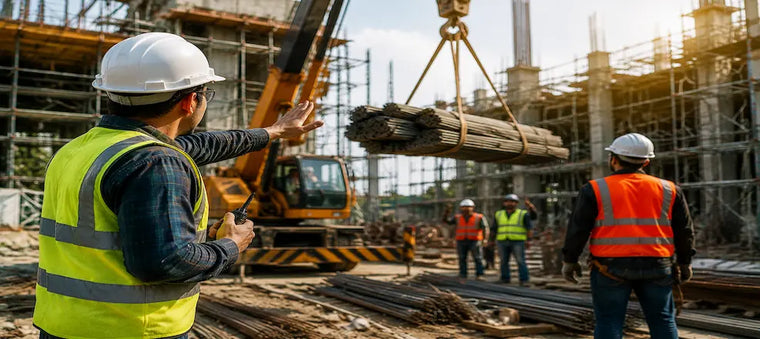
Construction sites change daily, with moving equipment, temporary structures, electrical work, workers at height, materials, dust, noise, and subcontractors all working together in the same space. This constant change is what makes construction one of the most unpredictable work environments.
Construction site hazards are not limited to one role. They affect workers, supervisors, safety officers, contractors, managers, and visitors alike.
Construction site hazards are one of the leading reasons workplace accidents happen in construction projects, but many of these accidents can be prevented through proper planning, hazard identification, training, supervision, and safety controls.
For professionals and learners who want structured knowledge, our construction safety training course provides a practical foundation in identifying and controlling site hazards.
What Are Construction Site Hazards?
Construction site hazards are unsafe conditions, activities, equipment, materials, or behaviours that can cause injury, illness, property damage, or workplace accidents on a construction project.
These hazards generally fall into six categories:
-
Physical — falls, moving vehicles, noise, vibration
-
Mechanical — machinery, cranes, tools, equipment
-
Electrical — live wires, temporary power, overhead lines
-
Chemical — cement, solvents, silica dust, fumes
-
Environmental — heat, poor lighting, weather, unstable ground
-
Human/organisational — poor communication, weak supervision, lack of training
Understanding these categories is the first step toward reducing broader construction hazards and improving construction workplace safety across every phase of a project, forming the basis of strong health and safety in construction practice.
Most Common Construction Hazards on Site
1. Fall Hazards in Construction
Falls occur from roofs, scaffolds, ladders, openings, edges, and unstable platforms — making them one of the most frequent causes of serious injury on site. Effective controls include guardrails, fall arrest systems, safe access, regular inspection, and working-at-height training.
OSHA's Focus Four materials identify falls as one of the major construction hazard categories, alongside struck-by, caught-in/between, and electrocution hazards.
2. Struck-By Hazards
Struck-by incidents involve moving vehicles, falling tools, suspended loads, cranes, forklifts, and flying debris. Common prevention measures include:
- Traffic management
- Exclusion zones
- High-visibility clothing
- Tool tethering
- Load control
- Clear communication
3. Caught-In or Caught-Between Hazards
These hazards include trench collapse, machinery pinch points, rotating equipment, collapsing structures, and workers trapped between vehicles or materials.
Prevention relies on solid excavation safety procedures, trench protection, machine guarding, lockout/tagout systems, and maintaining safe operating distances around heavy equipment.
4. Electrical Hazards in Construction
Electrical hazards on site often stem from temporary wiring, damaged cords, live panels, wet conditions, overhead power lines, and unqualified electrical work.
NIOSH highlights electrocution as a persistent construction risk and notes that many electrical fatalities involve direct contact with electricity or contact with overhead/underground power lines.
5. Health Hazards: Dust, Noise, Chemicals and Manual Handling
Long-term health hazards include silica dust, cement, solvents, welding fumes, vibration, repetitive lifting, and noise exposure. UK HSE lists construction health risks including dust, cement, chemicals, asbestos, silica, noise, vibration, and manual handling — risks that often cause harm gradually rather than through a single incident.
Why Construction Accidents Happen
Construction accidents rarely stem from a single cause. Common root causes include:
- Poor construction risk assessment
- Weak construction hazard identification
- Lack of construction safety training
- Unsafe shortcuts
- Poor supervision
- Missing PPE
- Unclear method statements
- No permit-to-work system
- Weak near miss reporting
- Poor safety culture
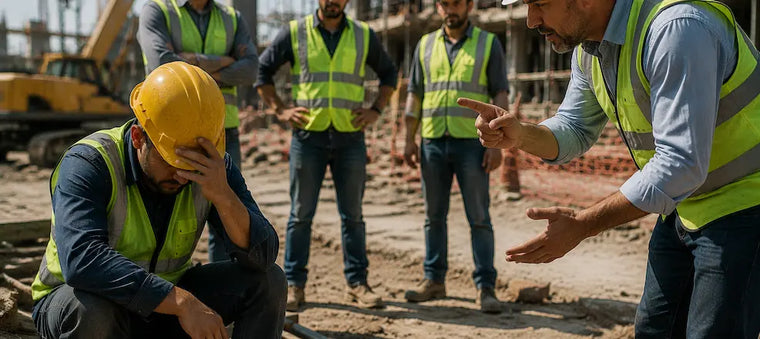
Most construction accidents are not random. They usually happen when hazards are known but not properly controlled.
Addressing these root causes — rather than reacting only after an incident — is what separates sites with strong safety performance from those with recurring problems.
How to Prevent Construction Accidents: Practical Control Methods
Preventing construction accidents relies on a structured approach that identifies hazards before they cause harm and applies proven controls consistently.
1. Identify Hazards Before Work Starts
Hazard identification begins with site walkdowns, a thorough construction hazard assessment, job safety analysis (JSA/JHA), toolbox talks, and pre-task briefings. These steps catch risks before workers are exposed to them.
2. Assess the Risk
Once hazards are identified, risk assessment should consider:
- What can go wrong?
- Who may be harmed?
- How severe could the injury be?
- How likely is it?
- What controls are needed?
3. Control the Hazard
Effective control follows a clear hierarchy:
-
Eliminate unnecessary hazards
-
Substitute safer materials or methods
-
Engineer controls such as guardrails, barriers, ventilation
-
Administrative controls such as permits, procedures, signs, supervision
-
PPE such as hard hats, gloves, eye protection, respirators, harnesses
4. Train and Supervise Workers
Ongoing training — including induction, orientation, toolbox talks, refreshers, and role-specific training — ensures workers understand hazards and controls before starting work.
Professionals who want to strengthen site planning, inspections, hazard control, and safe work procedures can benefit from Construction Safety (Site Safety Management).
Construction Safety Checklist for Safer Sites
Use this checklist to confirm that essential controls are in place before and during work:
- Are fall protection systems installed and inspected?
- Are scaffolds and ladders safe for use?
- Are excavations protected from collapse?
- Are electrical cables, panels, and tools inspected?
- Are workers wearing correct PPE?
- Are cranes, forklifts, and vehicles separated from pedestrians?
- Are hazardous substances labelled and controlled?
- Are noise, dust, silica, and fumes managed?
- Are toolbox talks completed before high-risk work?
- Are near misses and incidents reported?
- Is there a clear emergency response plan?
- Are supervisors actively checking safe work practices?
This checklist should be adapted to local legal requirements and project-specific risks rather than used as a one-size-fits-all document.
Construction Safety Management: Turning Prevention into a System
Prevention is not only about individual rules — it requires a complete construction safety management system that connects planning, execution, and review.
Key elements include:
- Site safety plan
- Construction health and safety plan
- Risk assessments
- Method statements
- Permit-to-work
- PPE programme
- Inspections and audits
- Incident reporting
- Training records
- Corrective actions
- Leadership and worker participation
UK HSE construction guidance covers safety hazards such as work at height, excavations, lifting, electricity, fire, plant and vehicles, as well as health risks such as dust, silica, noise, vibration, and manual handling. A complete system addresses both categories together rather than treating them separately.
Construction Safety Training and Safety Culture
Procedures only work when people understand and follow them. This is where construction safety awareness training, construction worker safety training, construction toolbox talks, and daily safety topics construction become essential — supported by a solid construction safety induction and construction site safety orientation for every new starter.
A strong construction safety culture encourages workers to report hazards, stop unsafe work, ask questions, and participate in accident prevention.
To build these skills in a structured way, learners can enrol in Construction Safety (Site Safety Management) and develop practical knowledge in hazard identification, site safety planning, and workplace accident prevention.
Build Safer Sites Before Accidents Happen
Construction safety is not only about compliance. It is about protecting lives, preventing injuries, reducing delays, and building professional worksites where everyone understands their responsibility.
By identifying construction site hazards early and applying strong prevention methods, organisations can reduce accidents and create safer construction projects.
For learners, workers, supervisors, and safety professionals who want to improve their knowledge, the Construction Safety (Site Safety Management) course provides a practical foundation for safer site operations and better accident prevention.