Featured Course
Fire Safety & Fire Warden Training
Build the skills to act with confidence, prevent fire emergencies, and guide others safely when it matters most.


Build the skills to act with confidence, prevent fire emergencies, and guide others safely when it matters most.
A fire warden plays a vital role in keeping people safe at work. In simple terms, a fire warden helps prevent fires from starting, supports safe evacuation when an alarm sounds, guides workers and visitors during emergencies, checks fire safety arrangements on a regular basis, and assists with fire drills and workplace awareness programmes.
Without someone fulfilling this role, workplaces are slower to respond, evacuation can become disorganised, and small hazards may go unnoticed until they become serious problems.
Depending on your country or employer, this role may carry a different title. You may hear it called a fire marshal, fire safety warden, or evacuation warden.In many workplaces, the equivalent role is known as a fire warden, fire marshal, or trained fire safety helper. This person supports fire prevention, guides employees during evacuation, checks escape routes, and helps ensure emergency procedures are followed.
Regardless of the title used, the core purpose remains the same: to act as a prepared, responsible representative who bridges the gap between everyday workplace activity and fire safety requirements.
For learners who want structured, practical skills, the Fire Safety & Fire Warden Training course can help build solid knowledge of fire prevention, evacuation support, and day-to-day emergency responsibilities.
A fire warden is a trained workplace representative responsible for supporting fire safety before, during, and after an emergency.
It is important to understand that a fire warden is not a firefighter. They do not tackle fires beyond the most minor situations where it is safe, appropriate, and permitted by workplace procedure.
Instead, their role covers five key areas:
A fire warden is a trained workplace representative who supports fire prevention, helps people evacuate safely, checks assigned areas during drills or emergencies, reports hazards, and assists management with fire safety procedures.
On a practical level, this means checking that escape routes are clear, understanding where alarm call points and extinguishers are located, knowing the evacuation plan, and being ready to act calmly when an alarm sounds.
After a drill or real incident, a fire warden also feeds back observations to supervisors or the health and safety team so improvements can be made.
The terms 'fire warden' and 'fire marshal' are often used interchangeably in workplace settings. In the UK, fire warden is a commonly used term, while fire marshal also appears frequently in UK and Irish workplaces. In some US guidance, particularly around large venues and construction, the term evacuation warden may also be used.
The role may be known as a fire warden, fire marshal, fire safety officer, emergency coordinator, or trained fire safety helper, depending on the country and workplace system. Employers usually appoint suitable people based on workplace fire risk, workforce size, building layout, operational activities, and emergency arrangements.
In many workplaces, these roles support fire prevention, emergency preparedness, evacuation assistance, alarm response, escape route checks, and communication during emergencies.
Across different job titles, the core responsibilities are broadly similar: prevent fires where possible, prepare workers for emergencies, guide people safely during evacuation, and support an organised response when an incident occurs.
The exact duties, training requirements, certification expectations, and legal obligations vary by country, industry, building type, and employer procedures. Employers should always follow the fire safety regulations that apply in their location, together with internal emergency plans and workplace safety guidance. Employers should always follow the fire safety regulations that apply in their location, such as the UK's HSE introduction to fire safety guidance, together with internal emergency plans.

Fire warden duties are practical, ongoing, and relevant across all types of workplaces. The following checklist covers the core responsibilities a fire warden should be ready to carry out.
A fire warden may be responsible for:
Fire warden duties can look different depending on the work environment.
Office
In an office, a fire warden may check that fire doors are not propped open, printer rooms are tidy, escape routes are clear, and colleagues know where to go during evacuation.
Factory or Warehouse
In a factory or warehouse, a fire warden may monitor that flammable materials are stored correctly, loading bay exits remain accessible, and shift supervisors are informed during drills or emergencies.
Construction Site
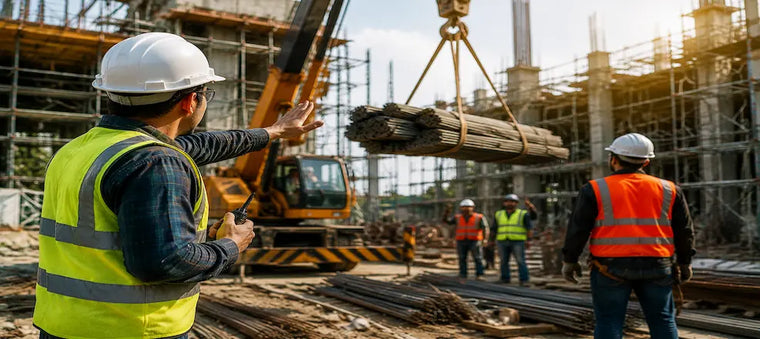
On a construction site, a fire warden may check that temporary escape routes remain safe as the site layout changes and that contractors know the muster point.
Healthcare Setting
In healthcare, a fire warden may work within personal evacuation plans for patients with mobility needs, coordinate with clinical staff, and understand staged evacuation procedures.

The most valuable thing a fire warden does often happens long before any alarm sounds.
A good fire warden is useful before a fire happens, not only during one.
Before an emergency, a fire warden should:
This prevention-focused mindset reflects the approach set out in HSE's guidance on controlling fire and explosion risks in the workplace.
Think of the fire warden role in the same way you would think of a first aid representative. The real value is not measured only in how they perform during a crisis. It is measured in how prepared they keep the workplace so that a crisis is less likely, less severe, and better managed when it does occur.
When an emergency occurs, a fire warden must act quickly, calmly, and in line with the workplace’s established fire procedure.
Speed and clarity matter. Confusion during an evacuation can cost lives.

These responsibilities closely mirror the warden duties described in OSHA's guidance on evacuation plan elements, including checking assigned areas and accounting for visitors.
A fire warden must never take unnecessary personal risks.
Their own safety matters. An injured warden cannot help anyone.
Fire wardens should only use a fire extinguisher if:
When in doubt, evacuate.
Being an effective fire warden is about more than completing a checklist. It requires a combination of personal qualities and practical knowledge that allow someone to lead calmly when others may be panicking.
Important fire warden skills include:
These skills are highly transferable and valued beyond the warden role itself.
The following professionals can benefit from fire warden training:
For job seekers, completing fire warden training signals responsibility, preparedness, and professional maturity to employers.

Effective fire wardens are made through structured training, not assumption. A fire warden who has not been properly trained may increase confusion during an emergency rather than reduce it.
Quality fire warden training should cover:
For workplaces in any country, fire safety training should reflect the role of appointed fire wardens, fire marshals, or responsible fire safety helpers. Training should align with local workplace fire safety laws, emergency procedures, evacuation plans, risk assessment findings, and employer safety policies. In the US, for example, employer obligations around training and designating evacuation assistance are set out in OSHA standard 1910.38 on emergency action plans.
The Fire Safety & Fire Warden Training course provides a practical, structured learning path for workers, supervisors, HSE staff, and career seekers who want to build genuine fire warden knowledge and confidence.
Use this checklist as a quick reference for fire warden duties at any workplace:
Fire warden training delivers practical benefits that extend far beyond ticking a regulatory box.
For organisations, trained fire wardens help:
Fire warden training also helps ensure that someone is prepared to lead, guide, and communicate when an alarm sounds.
For employees, fire warden training builds confidence and practical awareness.
Workers feel more secure when they know:
For HSE and facility teams, trained fire wardens help distribute responsibility sensibly.
This means no single person carries the full burden of emergency coordination alone. Fire wardens act as local points of awareness across departments, floors, zones, or shifts.
For job seekers and professionals building safety-related careers globally, fire warden certification adds practical value to a CV.
It can support roles such as:
Fire warden training signals a genuine commitment to workplace safety and emergency preparedness.
Even trained fire wardens can become ineffective if the role is not clearly managed.
Fire wardens are most effective when they support prevention every day, not only when an alarm sounds.
A fire warden should never place themselves in danger. Their role is to support safe evacuation and communication, not to act as a professional firefighter.
A fire warden must know escape routes, alternative exits, assembly points, and high-risk areas in their assigned zone.
Visitors and contractors may not know the building, alarm signals, or assembly point. Fire wardens should be prepared to guide them.
Fire drills are only useful if lessons are recorded and acted upon. Fire wardens should report blocked routes, confusion, delays, or communication problems.

A fire warden is a trained workplace safety representative who supports prevention, evacuation, communication, and emergency readiness every single day.
Their role protects people, reduces panic, and strengthens the overall safety culture of any organisation — whether it is an office, warehouse, construction site, factory, healthcare facility, or educational environment.
A fire plan without trained wardens is just a document. Fire wardens are the people who turn that plan into action when it matters most.
Ready to build your knowledge and confidence? The Fire Safety & Fire Warden Training course gives you the practical skills, structured learning, and certification to carry out the fire warden role effectively — wherever you work.