First Aid & Emergency Response

Practical first aid training online covering CPR, AED use, and emergency response — designed for workplace and everyday readiness.
  • CPR & AED Response
  • Bleeding Control
  • Emergency Scene Assessment
  • Shock Management
  • Incident Leadership
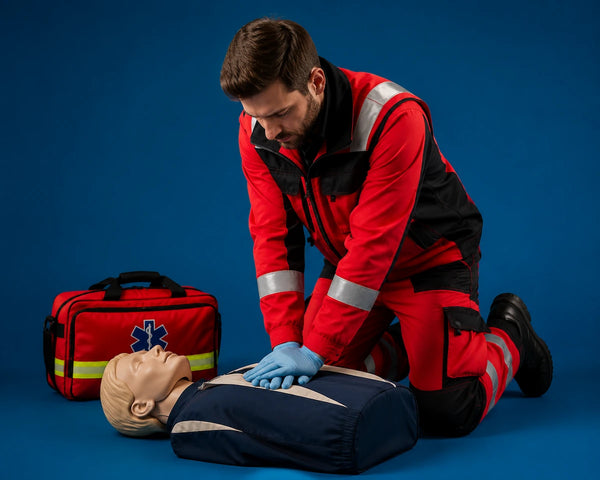
European first aid responder practicing CPR on a training mannequin with emergency medical equipment, demonstrating workplace first aid and life-saving response skills.

Overview

When someone collapses, stops breathing, or starts bleeding heavily at work, the first five minutes often decide the outcome - long before emergency services arrive. First aid training online prepares learners to recognise these critical moments and respond with confidence instead of panic. This matters because most workplace emergencies are handled not by paramedics, but by whoever happens to be nearby when it happens.

This course walks learners through the full range of emergency response skills, from CPR and AED use to controlling severe bleeding, managing shock, and responding to burns, fractures, and spinal injuries. As a result, learners finish the course able to assess a scene, take immediate action, and lead a coordinated response until professional help arrives. This is useful for anyone working in construction, offices, schools, retail, or any environment where emergencies can happen without warning. 

For global learners, workplace emergency preparedness is a shared expectation across safety frameworks - from OSHA's emergency action plan requirements in the US to HSE first aid guidance in the UK and EU-OSHA recommendations across Europe. In addition, this course is built to apply broadly, so professionals working under any of these frameworks can complete it and immediately apply what they learn in real workplace situations.

Emergency response team providing first aid assistance to an injured person, demonstrating CPR, patient assessment, and coordinated workplace emergency preparedness.

Learning Outcome

By the end of this course, learners will be able to:

  • Understand how workplace emergencies unfold and escalate in real time
  • Apply rapid scene safety and risk assessment before responding
  • Recognise the signs of cardiac arrest, breathing failure, and sudden collapse
  • Demonstrate effective CPR and chest compression technique
  • Apply AED use confidently during a cardiac emergency
  • Respond to choking and airway emergencies in unconscious casualties
  • Control severe bleeding and apply tourniquets correctly
  • Manage shock and prevent rapid patient deterioration
  • Assess and respond to burns, fractures, and spinal trauma
  • Implement workplace incident reporting and post-emergency documentation

Who is This Course Suitable For?

This course is ideal for:

  • Beginners with no prior safety training — the course builds emergency response skills from the ground up
  • Construction and manufacturing workers — who face higher exposure to serious workplace injuries
  • Office, school, and retail employees — who may be first on the scene during a medical incident
  • Supervisors and team leaders — responsible for coordinating emergency response among staff
  • Health and safety officers — building or reviewing workplace emergency action plans
  • HR and compliance professionals — managing first aid training records and coverage
  • Job seekers building workplace safety credentials — for entry into safety-focused roles
  • Employers and managers — needing compliant, consistent emergency response training
  • International professionals — working under US OSHA, UK HSE, or EU-OSHA emergency frameworks

Requirements

  • No prior occupational safety or medical knowledge required
  • Basic English reading and comprehension
  • An interest in workplace safety, emergency response, or professional development
  • Access to a computer, tablet, or smartphone with internet connection
  • No specialist equipment or software needed

Career Opportunities

Completing first aid training online supports entry into and advancement within roles where emergency response readiness is a core responsibility.

Workplace First Aider
Builds practical CPR, AED, and injury response skills needed to act as a designated first responder on site. Salaries typically range from £20,000–£30,000 in the UK and $30,000–$45,000 in the US.

Health and Safety Officer
Prepares learners to build emergency action plans and coordinate incident response across a workplace. Salaries typically range from £28,000–£45,000 in the UK and $50,000–$75,000 in the US.

Site Supervisor
Builds the leadership skills needed to direct a coordinated response during workplace emergencies.

HR / Compliance Coordinator
Strengthens understanding of first aid training requirements and incident documentation for staff records.

Security and Facilities Officer
Supports readiness to respond to medical incidents in offices, retail, and public-facing environments.

Emergency Response Team Member
Builds foundational skills for volunteer or workplace emergency response teams handling high-risk incidents.

Course Curriculum

5 sections20 lectures
Understanding How Emergencies Unfold in Real Life
The Life-Saving Mindset: Staying Calm When Others Panic
Scene Safety, Rapid Risk Assessment, and Personal Protection
Taking Control: Activating 911 and Leading the First Response
Recognizing Cardiac Arrest, Breathing Failure, and Sudden Collapse
CPR Confidence: Delivering Effective Chest Compressions
AED Mastery: Using Defibrillators Without Fear
Responding to Choking, Airway Emergencies, and Unconscious Casualties
Controlling Severe Bleeding and Using Tourniquets Effectively
Managing Shock and Preventing Rapid Patient Deterioration
Burn Emergencies: Thermal, Chemical, and Electrical Incidents
Fractures, Head Injuries, and Spinal Trauma Response
OSHA Expectations and Workplace Emergency Responsibilities
Building Fast, Coordinated Responses During Critical Incidents
Incident Reporting, Documentation, and Post-Emergency Actions
Leading Evacuations, Workplace Emergencies, and Safety Communication
Construction, Manufacturing, and High-Risk Workplace Emergencies
Office, School, Retail, and Public Space Medical Incidents
Managing Stress, Panic, and Human Behavior During Crises
Thinking Like an Emergency Responder: Decision-Making Under Pressure

Frequently Asked Questions

First aid training teaches people how to recognise and respond to medical emergencies such as cardiac arrest, severe bleeding, choking, and shock. It covers practical skills like CPR, AED use, and injury management. The goal is to prepare someone to act confidently in the first minutes before professional help arrives.

Many construction employers require at least one trained first aider on site due to higher injury risk. Requirements vary by country and employer, so it's worth confirming with your workplace. Completing this course provides a solid foundation regardless of specific local rules.

In several countries, employers have a legal duty to ensure adequate first aid provision, though the exact certification requirements vary by jurisdiction. For example, OSHA in the US and HSE in the UK both set workplace first aid expectations. This course supports that readiness but should be checked against local regulatory requirements.

First aid training gives employees the confidence and skills to respond quickly during a medical emergency, which can reduce harm before professional help arrives. It also supports workplace compliance and builds a stronger overall safety culture. For employees, it adds a practical, transferable skill to their credentials.

 Roles in construction, manufacturing, security, education, and facilities management often require a designated first aider on site. Supervisors and health and safety officers also benefit from this training to oversee emergency response planning. Many employers include it in standard safety onboarding for higher-risk roles.

Basic life support training typically covers CPR, AED use, and response to choking and airway emergencies in unconscious casualties. This course includes all of these core skills alongside broader emergency response and injury management content. It's designed to prepare learners for real workplace scenarios, not just isolated techniques.

Yes, this course is fully online and can be completed from a computer, tablet, or smartphone. It's designed for global learners and doesn't require any in-person sessions or specialist equipment. This makes it accessible for both individual learners and teams completing training together.