Incident Investigation / Root Cause Analysis

Master root cause analysis and incident investigation with practical RCA tools for building safer, more compliant workplaces.
  • Root Cause Identification
  • 5 Whys Analysis
  • Fishbone Diagram Mapping
  • Evidence-Based Investigation
  • Corrective Action Planning
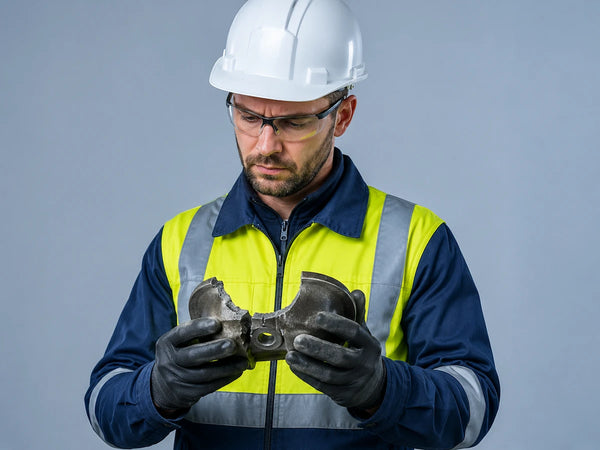
Safety professional in PPE examines a broken machine part, representing incident investigation, root cause analysis, equipment failure, and workplace safety training.

Overview

Workplace incidents rarely have a single cause, and organisations that only fix the symptom often see it happen again. This root cause analysis training course teaches learners how to investigate incidents systematically and identify the true underlying cause of workplace failures, rather than settling for the first explanation that seems obvious.

Many organisations respond to an incident, quality failure, or near miss by addressing whatever is most visible - a broken guard, a missed step, a distracted worker — without asking why the failure was possible in the first place. As a result, the same problem often resurfaces weeks or months later, sometimes with more serious consequences. This course changes that pattern by teaching a structured, evidence-based approach to root cause analysis (RCA), using proven tools such as the 5 Whys method, Fishbone (Ishikawa) diagrams, and Pareto analysis to separate root causes from contributing factors.

This root cause analysis training course is designed for global learners and is directly relevant to safety, quality, and operations professionals working under frameworks such as ISO 45001, OSHA, EU-OSHA, and HSE guidance. In addition to technical tools, learners build the investigative mindset needed to plan an RCA, gather reliable evidence, verify a true root cause, and turn findings into corrective actions that actually prevent recurrence - a skill set valued across construction, manufacturing, healthcare, logistics, and any workplace where incidents or quality failures occur.

Safety officers in PPE investigate broken equipment at a workplace incident scene, showing root cause analysis, evidence review, and industrial safety inspection.

Learning Outcome

By the end of this course, learners will be able to:

  • Understand the purpose and value of root cause analysis in preventing recurring workplace problems
  • Identify the difference between a root cause and a contributing factor
  • Apply the 5 Whys method to drill down to the true source of a problem
  • Recognise common RCA mistakes, such as blaming individuals instead of systems
  • Implement Fishbone (Ishikawa) diagrams to map potential causes across categories
  • Assess data using the Pareto principle to prioritise which causes to investigate first
  • Conduct a structured RCA process, from planning and scoping to evidence gathering
  • Demonstrate how to verify whether a cause is genuinely a root cause
  • Develop corrective actions that are specific, measurable, and linked to the root cause
  • Explain how to embed root cause analysis into everyday workplace culture

Who is This Course Suitable For?

This course is ideal for:

  • Beginners with no prior safety training — the course builds RCA knowledge from the ground up, with no assumed background
  • Employees in construction, manufacturing, healthcare, and logistics — sectors where incidents and near misses are common and costly
  • Supervisors and team leaders responsible for staff safety — who need to lead investigations rather than just report incidents
  • HR and compliance professionals managing training records — who need to understand RCA to evaluate documentation and outcomes
  • Health and safety officers — looking to strengthen their investigation and problem-solving toolkit
  • Quality managers and continuous improvement teams — applying RCA to product defects and process failures, not just safety incidents
  • Job seekers building workplace safety credentials — who want a recognised skill set that applies across industries
  • Employers and managers needing compliant workforce training — to demonstrate a proactive approach to incident prevention
  • International professionals working under EU, UK, or US safety frameworks — where RCA is a recognised part of ISO 45001 and OSHA-aligned safety management systems

Requirements

  • No prior occupational safety knowledge required
  • Basic English reading and comprehension
  • An interest in workplace safety, problem-solving, or process improvement
  • Access to a computer, tablet, or smartphone with an internet connection
  • No specialist equipment or software needed
  • No prior RCA or quality management experience necessary

Career Opportunities

Root cause analysis is a transferable skill that strengthens a wide range of safety, quality, and operations roles.

Health and Safety Officer - Uses RCA to investigate incidents and near misses, then translates findings into corrective actions. Salaries typically range from £24,000–£40,000 in the UK and $45,000–$70,000 in the US.

Quality Assurance Manager - Applies RCA and Pareto analysis to recurring product or process defects, driving continuous improvement. Salaries range roughly £30,000–£50,000 in the UK and $60,000–$95,000 in the US.

Health and Safety Advisor - Supports investigations across multiple sites, using 5 Whys and Fishbone tools to standardise findings.

Continuous Improvement Specialist - Builds RCA into lean or Six Sigma processes to reduce repeat failures.

Site Supervisor / Team Leader - Leads on-the-ground investigations immediately after an incident, gathering evidence before it is lost.

Compliance Officer - Documents RCA findings and corrective actions for audit and regulatory purposes.

HSE Consultant - Advises multiple organisations on setting up structured RCA processes as part of a wider safety management system.

Course Curriculum

4 sections16 lectures
What Is Root Cause Analysis?
When Should RCA Be Used?
Root Cause vs Contributing Factors
Common RCA Mistakes to Avoid
The "5 Whys" Method
Fishbone (Ishikawa) Diagrams
Pareto Principle and Data Review
Combining Tools for Better Insight
Planning the RCA Process
Gathering Evidence and Data
Analysing the Problem
Identifying and Verifying Root Causes
Creating Corrective Actions
Preventing the Problem from Repeating
Reviewing and Following Up
Embedding RCA into Everyday Work

Frequently Asked Questions

Root cause analysis training teaches learners how to identify the true underlying cause of an incident, defect, or recurring problem, rather than just addressing surface-level symptoms. It covers tools such as the 5 Whys method and Fishbone diagrams. The course also shows how to plan an investigation, gather evidence, and turn findings into lasting corrective actions.

Incident investigation is the process of gathering facts about what happened, while root cause analysis is the method used to determine why it happened. In practice, the two work together — an investigation collects the evidence, and RCA tools are used to analyse that evidence and identify the true root cause.

No formal license is legally required to conduct root cause analysis in most industries. However, certification demonstrates that you understand structured methods like the 5 Whys and Fishbone analysis, which many employers value when assigning investigation responsibilities.

Root cause analysis itself is not typically mandated by name in law, but many safety frameworks, including ISO 45001, expect organisations to investigate incidents and address underlying causes as part of continuous improvement. This course helps meet that expectation in practice.

Employees gain the ability to investigate problems systematically instead of guessing at causes, which reduces repeat incidents and improves workplace safety. It also builds transferable problem-solving skills that apply beyond safety, including quality and process improvement.

Roles such as health and safety officer, quality assurance manager, continuous improvement specialist, and site supervisor regularly rely on root cause analysis. It's also a valued skill for compliance officers and HSE consultants who investigate incidents across multiple sites.

Yes, this course is designed for beginners and assumes no prior safety or quality management experience. It starts with foundational concepts before introducing tools like the 5 Whys and Fishbone diagrams, making it accessible to anyone new to the topic.