Lockout / Tagout

Master lockout tagout training online. Learn hazardous energy control, OSHA compliance, and safe machine isolation procedures for any industry.
  • Energy Isolation
  • Hazard Recognition
  • OSHA Compliance
  • Safe Work Procedures
  • Risk Control
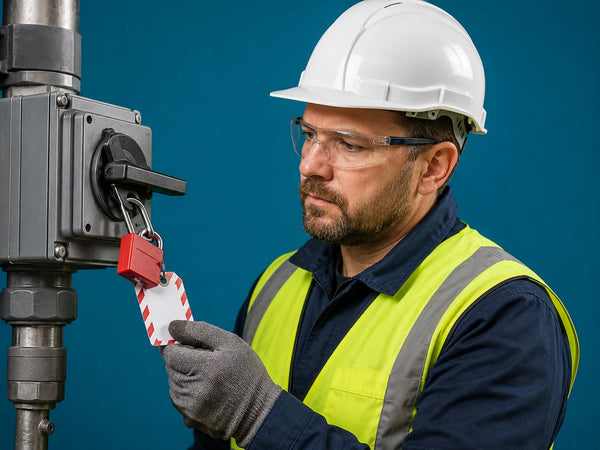
European industrial worker wearing PPE applying a red lockout tagout padlock to an electrical switch for workplace safety training.

Overview

Every year, workers are seriously injured or killed because machinery was not properly de-energised before maintenance or repair began. This lockout/tagout training course teaches you how to identify, isolate, and control hazardous energy sources so equipment can be serviced safely, without the risk of unexpected startup or the release of stored energy.

This course solves a real workplace problem: energy control failures remain one of the most consistently cited causes of serious injury across manufacturing, construction, utilities, and industrial maintenance. Learners will gain a clear understanding of energy isolation techniques, regulatory requirements under OSHA 29 CFR 1910.147, and the practical skills needed to build or support a compliant energy control program.

As a result, this course is valuable for professionals worldwide. Whether you work under US OSHA rules, UK HSE guidance, or EU-OSHA frameworks, the core principles of hazardous energy control are globally consistent, making this training applicable no matter where you work.

Industrial workers performing lockout tagout training on a control panel for hazardous energy safety


Learning Outcome

By the end of this course, learners will be able to:

  • Identify the different types and sources of hazardous energy in a workplace
  • Understand the regulatory requirements of OSHA 29 CFR 1910.147 and ANSI/ASSP Z244.1
  • Apply correct lockout and tagout procedures to isolate energy sources
  • Recognise stored energy hazards in complex equipment and systems
  • Establish and verify a zero-energy state before maintenance begins
  • Develop machine-specific lockout / tagout procedures for real equipment
  • Manage training requirements for authorized, affected, and other employees
  • Conduct periodic inspections and audits of an energy control program
  • Assess group lockout and multi-employer coordination challenges
  • Implement safe re-energization steps to restore equipment to service

Who is This Course Suitable For?

This course is ideal for:

  • Beginners with no prior safety training — the course builds knowledge from the ground up, with no assumed background
  • Maintenance and production employees — anyone who works directly with machinery that requires servicing or repair
  • Supervisors and team leaders — those responsible for enforcing safe energy control practices on their teams
  • HR and compliance professionals — staff managing training records and regulatory documentation
  • Health and safety officers — professionals overseeing site-wide hazardous energy control programs
  • Job seekers building safety credentials — anyone entering industrial, manufacturing, or maintenance roles
  • Employers and managers — those needing a compliant, verifiable training solution for their workforce
  • International professionals — learners working under US, UK, or EU occupational safety frameworks
  • Contractors and multi-employer site workers — those coordinating energy control across shared workspaces
  • Engineers working with automated systems — professionals needing updated knowledge on robotics and smart manufacturing isolation

Requirements

  • No prior occupational safety knowledge required
  • Basic English reading and comprehension
  • An interest in workplace safety, hazard control, or professional development
  • Access to a computer, tablet, or smartphone with an internet connection
  • No specialist equipment or software needed
  • Familiarity with basic workplace machinery is helpful but not required

Career Opportunities

This course strengthens your qualifications for a range of roles where hazardous energy control knowledge is essential.

Maintenance Technician - Builds practical skills in identifying and isolating energy sources before servicing equipment. Salaries typically range from £24,000–£38,000 in the UK and $40,000–$60,000 in the US.

Health and Safety Officer - Prepares learners to oversee compliance with OSHA and equivalent regulatory frameworks. Salaries typically range from £28,000–£45,000 in the UK and $50,000–$75,000 in the US.

Plant or Facilities Manager - Supports oversight of site-wide energy control programs and staff training compliance. Salaries typically range from £35,000–£55,000 in the UK and $60,000–$90,000 in the US.

Compliance Officer - Builds documentation and audit skills needed for regulatory reporting and inspections. Salaries typically range from £27,000–£42,000 in the UK and $48,000–$70,000 in the US.

Manufacturing Supervisor - Prepares learners to enforce safe procedures among authorized and affected employees. Salaries typically range from £26,000–£40,000 in the UK and $45,000–$65,000 in the US.

Contractor Safety Coordinator - Builds skills for managing energy control across multi-employer worksites. Salaries typically range from £25,000–£40,000 in the UK and $42,000–$68,000 in the US.

Course Curriculum

5 sections20 lectures
Introduction to Hazardous Energy and Workplace Risks
Types and Sources of Hazardous Energy
History, Purpose, and Evolution of Lockout / Tagout
Roles, Responsibilities, and Safety Culture in Energy Control
OSHA 29 CFR 1910.147 and Control of Hazardous Energy
ANSI/ASSP Z244.1 and Alternative Methods of Energy Control
International Standards and Global Regulatory Approaches
Compliance Management, Documentation, and Enforcement Expectations
Identifying Energy Sources and Isolation Points
Lockout Devices, Tagout Devices, and Isolation Equipment
Establishing and Verifying a Zero-Energy State
Restoring Equipment to Service and Safe Re-Energization
Building an Effective Energy Control Program
Writing Machine-Specific Lockout / Tagout Procedures
Training Requirements for Authorized, Affected, and Other Employees
Periodic Inspections, Audits, and Continuous Improvement
Group Lockout, Shift Changes, and Multi-Employer Operations
Contractor Management and Coordination of Hazardous Energy Control
Stored Energy Hazards and Complex Isolation Challenges
Lockout / Tagout for Robotics, Automated Systems, and Smart Manufacturing

Frequently Asked Questions

Lockout tagout training teaches workers how to safely isolate hazardous energy sources before servicing or repairing machinery. It covers identifying energy types, applying lockout and tagout devices, and verifying a zero-energy state. This training helps prevent injuries caused by unexpected equipment startup.

Many manufacturing employers require lockout tagout training for staff who work with or near machinery. Requirements vary by employer, role, and jurisdiction. This course provides the foundational knowledge commonly expected across industrial and maintenance positions.

In the US, OSHA 29 CFR 1910.147 requires employers to train employees on hazardous energy control procedures. Similar expectations exist under other regulatory frameworks internationally. This course reflects those requirements but does not replace employer-specific compliance programs.

This training reduces the risk of serious injury from hazardous energy exposure during maintenance work. It also builds confidence in following correct isolation procedures and supports compliance with workplace safety expectations. Employees gain practical, transferable safety skills.

Roles such as maintenance technicians, manufacturing supervisors, plant managers, and health and safety officers often require this knowledge. It's also relevant for contractors and engineers working with automated systems. Demand spans manufacturing, construction, and utilities sectors.

Yes, this course is designed for learners with no prior occupational safety background. It starts with foundational concepts before progressing to regulatory frameworks and advanced applications. No specialist equipment or experience is required.

Yes, the entire course is delivered online and can be accessed from a computer, tablet, or smartphone. Learners can study at their own pace without needing to attend in-person sessions. A stable internet connection is the only technical requirement.