Machine Guarding Safety

Practical machine guarding safety training covering guards, interlocks, lockout tagout, and risk assessment for global manufacturing teams
  • Hazard Recognition
  • Guard Selection
  • Risk Assessment
  • Lockout Tagout
  • Guard Inspection
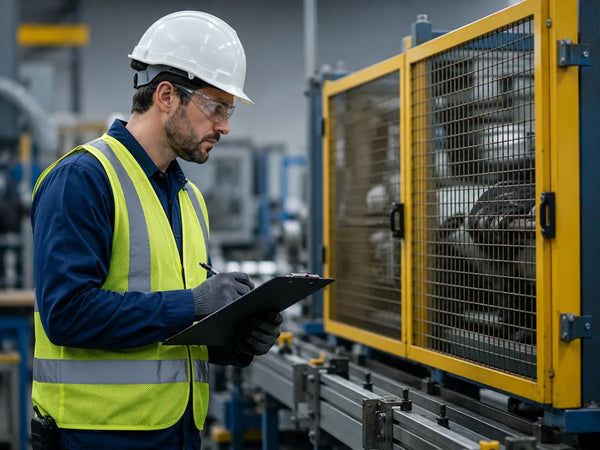
European factory worker wearing safety helmet, high-visibility vest, and gloves inspecting guarded machinery with clipboard in industrial production environment.

Overview

Machine guarding safety training teaches workers and supervisors how to identify moving-part hazards and use guards, interlocks, and safe work procedures to prevent injury. Every year, unguarded or poorly maintained machinery causes serious workplace injuries across manufacturing, food processing, warehousing, and construction. This course exists to close that gap with practical, job-ready knowledge.

Machinery hazards are not limited to one industry or one country. From assembly lines in the US to packaging plants in the EU and processing facilities across Asia-Pacific, the same risks appear wherever moving parts, pinch points, and automated systems are present. Regulatory frameworks such as OSHA machine guarding standards, the EU Machinery Directive, and ISO 12100 all point to the same conclusion: guarding and risk assessment are core, non-negotiable safety functions.

This course gives learners a clear path to understanding hazardous motion, guard types, risk assessment methods, and safe work practices like lockout tagout. As a result, learners finish with practical skills they can apply immediately on the shop floor, whether they are new to safety roles or responsible for supervising others.

A team of four European workers in safety helmets and high-visibility vests inspecting guarded machinery in an industrial factory, focusing on safety compliance and risk assessment.

Learning Outcome

By the end of this course, learners will be able to:

  • Understand the basic mechanics of machine-related risk and injury
  • Identify hazardous motion types and common injury pathways
  • Recognise global safety duties tied to machine guarding compliance
  • Apply the correct guard type for fixed, interlocked, and presence-sensing setups
  • Assess machinery tasks using structured risk assessment methods
  • Implement risk reduction and control validation techniques
  • Follow lockout tagout procedures during maintenance and jam clearing
  • Conduct guard inspections as part of routine safety checks
  • Demonstrate safe work practices across manufacturing, food, and warehousing settings
  • Explain modern safety considerations for robotics, automation, and digital controls

Who is This Course Suitable For?

This course is ideal for:

  • Beginners with no prior machine safety training who need a solid foundation
  • Manufacturing and production line workers exposed to machinery hazards daily
  • Food and packaging line operators working near conveyors and automated equipment
  • Supervisors and team leaders responsible for enforcing guarding procedures
  • Health and safety officers auditing guard compliance across a site
  • HR and compliance professionals maintaining staff training records
  • Maintenance technicians who service, clean, or repair guarded machinery
  • Job seekers building workplace safety credentials for manufacturing roles
  • Employers needing consistent, compliant machine safety training for their workforce
  • International professionals working under OSHA, EU Machinery Directive, or HSE frameworks

Requirements

  • No prior occupational safety knowledge required
  • Basic English reading and comprehension
  • An interest in workplace safety, risk reduction, or machinery hazard prevention
  • Access to a computer, tablet, or smartphone with an internet connection
  • No specialist equipment or software needed
  • Helpful (not required): basic familiarity with a manufacturing or production environment

Career Opportunities

Completing machine guarding safety training strengthens a learner's profile for roles that involve direct exposure to machinery or responsibility for workplace safety compliance.

Health and Safety Officer Builds the risk assessment and guard inspection skills needed to audit machinery compliance across a site. Salaries typically range from £28,000–£45,000 in the UK and $50,000–$80,000 in the US.

Production Supervisor Prepares supervisors to enforce guarding procedures and lockout tagout compliance on the floor. Supports day-to-day oversight of safe machine operation and team accountability.

Maintenance Technician Reinforces safe jam-clearing, cleaning, and inspection practices required before servicing guarded equipment. Reduces risk during high-hazard maintenance tasks.

Manufacturing Machine Operator Builds practical awareness of hazardous motion and injury pathways for daily machine operation. Supports safer handling of fixed and interlocked guard systems.

Compliance and Training Coordinator Supports the design and delivery of internal machine safety training programs. Helps maintain accurate staff training and certification records.

Warehouse and Logistics Safety Coordinator Applies guarding principles to conveyor systems and automated warehouse equipment. Prepares coordinators to manage contractor and staff safety on site.

EHS (Environmental, Health & Safety) Assistant Provides a working foundation in machine risk assessment to support broader EHS responsibilities. Useful for entry-level EHS career paths in industrial settings.

Course Curriculum

6 sections24 lectures
Machine Risk Basics
Hazardous Motion
Injury Pathways
Global Safety Duties
Fixed Guards
Interlocked Guards
Presence-Sensing Devices
Emergency Controls
Task-Based Assessment
Hazard Identification
Risk Reduction
Control Validation
Lockout Tagout
Jam Clearing
Cleaning and Maintenance
Guard Inspection
Manufacturing Safety
Food and Packaging Lines
Conveyors and Warehousing
Contractors and Supervision
Robotics and Automation
Interlock Defeat Prevention
Digital Safety Controls
Continuous Improvement

Frequently Asked Questions

Machine guarding training teaches workers how to identify machinery hazards and use guards, interlocks, and safe procedures to prevent injury. It covers guard types, risk assessment, and safe work practices like lockout tagout. This knowledge applies across manufacturing, food processing, and warehousing environments.

Requirements vary by employer and region, but many manufacturing sites expect staff to complete machine safety training. This course gives learners a recognised completion certificate that supports internal compliance records. Always check your specific employer or regional requirements.

Many regulatory frameworks, including OSHA machine guarding standards and the EU Machinery Directive, require employers to provide adequate machine safety training. Legal requirements differ by country and industry. This course supports awareness and compliance readiness but does not replace legal advice.

You can complete this course fully online, at your own pace, through any device with an internet connection. Once you finish all modules, you receive a digital certificate of completion. No in-person attendance is required.

Employees gain practical skills to recognise hazardous motion, use guards correctly, and follow safe lockout tagout procedures. This reduces injury risk and builds confidence around machinery. It also strengthens a worker's safety credentials for career progression.

Roles such as machine operators, maintenance technicians, production supervisors, and health and safety officers often benefit from machine guarding certification. It is especially relevant in manufacturing, food and packaging, and warehousing settings. Employers in these sectors frequently value this training.

 Yes, this course is designed for learners with no prior occupational safety background. It starts with foundational concepts before moving into guard types, risk assessment, and workplace application. No previous experience is required.