Noise & Vibration at Work

Practical noise and vibration at work training covering HAVS, hearing risks, exposure assessment, and workplace controls.
  • Hazard Recognition
  • Exposure Assessment
  • Hearing Protection
  • Vibration Control
  • Risk Reporting
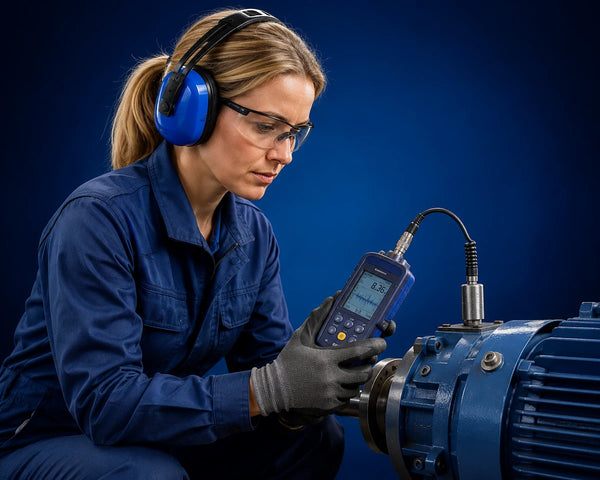
European female industrial worker wearing hearing protection and safety glasses, using a handheld vibration meter on a machine in a professional industrial setting. Focused on occupational noise and vibration safety.

Overview

Every year, workers across construction, manufacturing, and heavy industry lose part of their hearing or develop lasting hand and arm damage from hazards they couldn't see or feel building up over time. This noise and vibration at work training course helps learners understand how sound and mechanical vibration affect the body, why exposure often goes unnoticed until damage is already done, and what practical steps prevent long-term harm.

Noise-induced hearing loss and Hand-Arm Vibration Syndrome (HAVS) are among the most common preventable occupational health conditions worldwide, and both are addressed directly by regulations such as the UK's Control of Noise at Work Regulations 2005 and Control of Vibration at Work Regulations 2005, as well as broader EU-OSHA physical agents guidance. As a result, employers in construction, engineering, transport, and manufacturing increasingly require staff to complete recognised awareness training as part of routine compliance.

This course is built for global learners - whether you're a site supervisor, a compliance officer, or someone entering an industrial role for the first time. In addition to explaining the science of exposure, it gives learners practical tools for recognising early warning signs, understanding assessment methods, and applying the hierarchy of controls in real working environments.

Four European workers wearing earmuffs, safety glasses, and gloves, collaborating to monitor noise and vibration levels using measurement devices and a laptop in an industrial workshop. Focus on occupational health and safety compliance.

Learning Outcome

By the end of this course, learners will be able to:

  • Understand how noise and vibration exposure accumulates and causes harm over time
  • Identify the main pathways through which workers are exposed to noise and vibration
  • Recognise early warning signs of hearing damage and vibration-related injury
  • Explain the differences between continuous, intermittent, and impact noise
  • Assess hand-arm vibration and whole-body vibration risks in practical settings
  • Apply the hierarchy of controls to reduce noise and vibration exposure
  • Conduct basic pre-task risk checks before using vibrating tools or machinery
  • Manage exposure records and health surveillance requirements
  • Demonstrate correct use of hearing protection and vibration-reducing equipment
  • Follow reporting procedures for suspected noise or vibration-related health issues

Who is This Course Suitable For?

This course is ideal for:

  • Beginners with no prior safety training — the course builds understanding from first principles, with no assumed background knowledge
  • Construction and groundworks employees — who regularly use vibrating tools such as breakers, drills, and compactors
  • Manufacturing and engineering workers — exposed to continuous machinery noise across long shifts
  • Supervisors and team leaders — responsible for monitoring exposure and enforcing protective measures on-site
  • HR and compliance professionals — who manage training records and need to understand exposure documentation requirements
  • Health and safety officers — conducting or reviewing noise surveys and vibration risk assessments
  • Job seekers building workplace safety credentials — looking to strengthen their CV for industrial or site-based roles
  • Employers and managers — needing compliant workforce training across noisy or vibration-exposed departments
  • International professionals — working under UK, EU, or comparable occupational health and safety frameworks

Requirements

  • No prior occupational safety knowledge required
  • Basic English reading and comprehension
  • An interest in workplace safety, risk reduction, or professional development
  • Access to a computer, tablet, or smartphone with an internet connection
  • No specialist equipment or software needed

Career Opportunities

Completing this course strengthens your credentials for a range of roles where noise and vibration exposure is a routine part of daily operations.

Health and Safety Officer Builds the assessment and documentation skills needed to monitor noise and vibration risks across a site. Salaries typically range from £28,000–£45,000 in the UK and $50,000–$80,000 in the US.

Site Supervisor Prepares supervisors to recognise exposure risks early and enforce correct use of hearing and vibration protection. Salaries typically range from £30,000–£42,000 in the UK.

Occupational Health Advisor Supports understanding of health surveillance requirements and early symptom recognition for HAVS and hearing loss. Salaries typically range from £32,000–£48,000 in the UK.

Compliance and Training Coordinator Develops skills for managing exposure records and organising staff training documentation. Salaries typically range from $45,000–$65,000 in the US.

Plant and Equipment Manager Applies engineering control knowledge to reduce vibration and noise output from machinery and vehicles. Salaries typically range from £35,000–£50,000 in the UK.

Construction Safety Advisor Uses course knowledge to advise on tool selection, task rotation, and control measures on-site. Salaries typically range from $50,000–$70,000 in the US.

Course Curriculum

6 sections24 lectures
Noise and Vibration Blind Spots
Exposure Pathways
Dose, Duration, and Trigger Time
Early Warning Signs
Sound Levels and Exposure
Continuous, Intermittent, and Impact Noise
Hearing Loss and Tinnitus
Alarms, Radios, and Communication
Hand-Arm Vibration
Whole-Body Vibration
Tools, Vehicles, and Surfaces
HAVS, Fatigue, and Back Strain
Pre-Task Risk Checks
Noise Surveys and Dosimetry
Vibration Estimation
Exposure Records
Hierarchy of Controls
Engineering Controls
Quiet and Low-Vibration Purchasing
Maintenance as a Control
Hearing Protection Done Right
PPE and Glove Limitations
Health Surveillance and Reporting
Contractors, Audits, and Leadership

Frequently Asked Questions

It is training that helps workers and employers recognise, assess, and reduce the risks of hearing damage and vibration-related injury in the workplace. It covers exposure sources, health effects, assessment methods, and control measures. This course is designed to build practical awareness rather than technical certification.

Many employers require hand-arm vibration awareness training for staff regularly using tools like drills, breakers, or grinders. This helps workers recognise early symptoms and use tools safely. Requirements vary by employer, industry, and jurisdiction, so it's worth checking your specific workplace policy.

In the UK and EU, employers have legal duties under regulations such as the Control of Noise at Work Regulations 2005 to assess and manage noise exposure. Awareness training supports compliance with these duties. Specific legal training requirements vary by country and industry.

Employees gain a clearer understanding of how to protect their hearing and physical health from long-term exposure. This means fewer missed warning signs and better use of protective equipment. It also supports safer, more compliant working practices across a team.

Roles involving regular use of vibrating tools or machinery — such as construction, groundworks, forestry, and manufacturing — commonly require this awareness. Supervisors and health and safety officers in these sectors also benefit from understanding vibration risks. Requirements depend on the specific employer and task exposure levels.

HAVS (Hand-Arm Vibration Syndrome) affects the hands and arms from tools like drills or grinders, while whole-body vibration affects the whole body, often from vehicles or heavy machinery. Both can cause long-term physical harm if not managed. This course covers both hazard types in separate modules.

Noise exposure should be reassessed whenever workplace conditions, tasks, or equipment change significantly, and periodically as part of routine risk management. Regular review helps catch increased exposure before harm occurs. Specific assessment frequency depends on employer policy and applicable regulations.